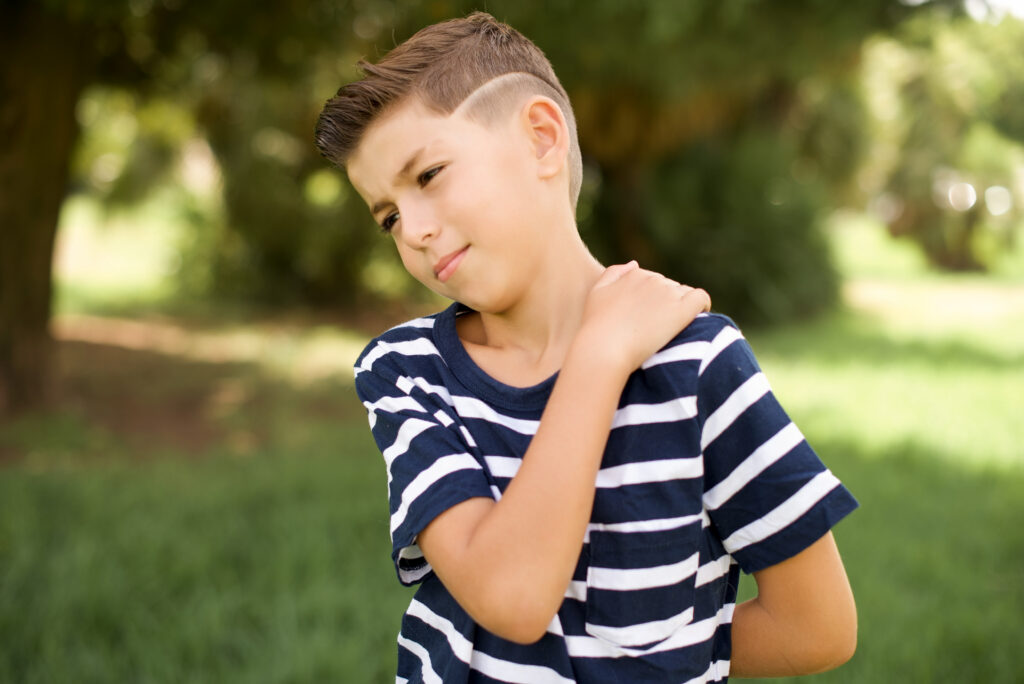
Shoulder pain can affect children and teens who participate in sports, especially activities that involve frequent throwing, serving, swimming, or other repetitive overhead movements. While occasional muscle soreness after activity may improve with rest, persistent or recurring pain may be a sign of an injury that needs further evaluation.
Shoulder and overuse injuries in growing athletes can affect the bones, growth plates, muscles and tendons, ligaments, cartilage, and other structures that help stabilize the shoulder. Unlike an acute injury caused by a single fall or collision, many overuse injuries develop gradually as repeated stress exceeds the body’s ability to recover.
Because children and teens are still growing, evaluating shoulder pain in a young athlete requires an understanding of the developing musculoskeletal system as well as the demands of the child’s sport. Identifying the source of pain early can help guide appropriate treatment, prevent symptoms from worsening, and support a safe return to activity.
What Are Shoulder and Overuse Injuries in Children and Teens?
The shoulder is a highly mobile joint that allows a child to lift, reach, throw, and rotate the arm in many directions. The shoulder joint is formed where the head of the humerus, or upper arm bone, meets the socket of the shoulder blade, or scapula. The surrounding shoulder muscles, ligaments, labrum, and rotator cuff tendons work together to provide movement and stability.
An acute shoulder injury can occur suddenly after a fall, collision, or other trauma. Overuse injuries, however, usually develop over time. Repeating the same movement without adequate recovery can place ongoing stress on the shoulder’s bones and soft tissues.
In growing athletes, repetitive stress may also affect developing areas of bone, including growth plates. This is one reason shoulder problems in children and adolescents may differ from similar symptoms in adults.
Common Causes of Pediatric Shoulder and Overuse Injuries
There is not one single cause of shoulder and overuse injuries. Often, several factors contribute to the development of symptoms. Common causes and risk factors include:
- Repetitive throwing or overhead movement
- Rapid increases in training volume or intensity
- Playing the same sport year-round without sufficient recovery
- Muscle weakness or imbalance
- Fatigue
- Poor throwing, serving, or movement mechanics
- Limited flexibility or range of motion
- Returning to sports before a previous injury has fully healed
When muscles become fatigued, an athlete’s normal body mechanics may change. Other muscles and tendons may then compensate, placing additional stress on the shoulder and sometimes the elbow. Over time, repetitive stress can contribute to conditions involving the rotator cuff, labrum, biceps tendon, growth plate, or movement of the scapula.
Sports and Activities That Increase Risk of Shoulder Injuries
Sports that require frequent overhead movements place particularly high demands on the shoulder. These include:
- Baseball and softball
- Swimming
- Tennis
- Volleyball
- Gymnastics
- Cricket
- Other throwing and overhead sports
Baseball and softball pitchers are especially susceptible because throwing repeatedly moves the shoulder through demanding positions at high speed. Tennis players may experience similar stress from repeated serves and overhead strokes, while swimmers perform thousands of repetitive shoulder movements during training.
Young athletes may also experience both shoulder and elbow pain, since the forces generated during throwing or serving travel through the entire upper extremity. Sports involving repeated overhead motion can place significant demands on the shoulder and elbow, and persistent pain, weakness, loss of motion, or difficulty performing the sport should not simply be played through.
Signs and Symptoms of Shoulder Overuse Injuries in Kids
Overuse symptoms often begin gradually. A young athlete may initially notice soreness after practice that disappears with rest. As the condition progresses, pain may begin earlier during activity, last longer afterward, or interfere with everyday movement.
Symptoms may include:
- Shoulder pain during or after activity
- Pain with throwing, serving, or swimming
- A dull ache in the shoulder or upper arm
- Weakness or fatigue
- Reduced throwing velocity or athletic performance
- Stiffness or loss of range of motion
- Pain or tenderness around the shoulder blade
- A feeling of instability or looseness
- Difficulty raising or rotating the arm
- Pain at night
Changes in performance can sometimes be an early clue. A pitcher who loses velocity, a swimmer who struggles with a particular stroke, or a tennis player whose serve becomes painful may be compensating for an underlying problem.
When Shoulder Pain in Children Is a Cause for Concern
Not every sore shoulder requires orthopedic care. Temporary muscle soreness after a new or strenuous activity may improve with appropriate rest. However, parents should pay attention to shoulder pain that persists, repeatedly returns with activity, becomes more severe, or begins interfering with sports or normal daily activities.
Medical evaluation may be appropriate if a child has:
- Persistent or worsening pain
- Significant weakness
- Difficulty lifting or moving the arm
- Loss of normal range of motion
- Numbness or tingling
- Swelling or bruising
- A visible deformity
- A shoulder that feels unstable or repeatedly slips out of place
- Pain that continues despite rest
- A noticeable decline in athletic performance
Pain that repeatedly returns or worsens should not simply be played through. Early evaluation can help identify the cause and determine whether activity modification or treatment is needed.
How Pediatric Shoulder Injuries Are Diagnosed
Diagnosis typically begins with a medical history and physical examination. A pediatric orthopedic specialist may ask when the symptoms started, which activities cause pain, how often the athlete practices or competes, and whether there has been a recent increase in training.
The examination may assess shoulder strength, stability, flexibility, range of motion, and movement of the shoulder blade. The specialist may also evaluate the athlete’s neck, elbow, or other areas when appropriate. Imaging is not necessary for every overuse injury. When indicated, X-rays can help evaluate the bones and growth plates. MRI may be recommended when more detailed evaluation of soft tissues such as the labrum or rotator cuff tendons is needed.
Treatment Options for Shoulder and Overuse Injuries in Children
Treatment depends on the cause and severity of the injury as well as the child’s age, skeletal maturity, symptoms, and sport. For many shoulder and overuse injuries, treatment begins without surgery and may include:
- Temporary rest from painful activities
- Activity modification
- Ice for discomfort or inflammation
- Anti-inflammatory medication when medically appropriate
- Physical therapy
- Gradual return to sports
Physical therapy can be particularly important for young athletes with weakness, limited flexibility, or altered mechanics. Therapy may include exercises to strengthen the rotator cuff, scapular stabilizers, core, and other muscles involved in athletic movement. A physical therapist may also evaluate throwing or movement mechanics and address weaknesses or imbalances that contributed to the problem.
When there is a significant structural injury, such as certain labral tears or instability, additional treatment may be necessary. Surgery is reserved for cases in which it is appropriate based on the specific injury and the needs of the growing athlete.
Preventing Shoulder Injuries in Young Athletes
Not every sports injury is preventable, but appropriate training and recovery habits can help reduce the risk of some overuse problems. Young athletes should:
- Warm up before practices and games
- Increase training volume gradually
- Use age-appropriate throwing and serving workloads
- Learn proper sport-specific technique and body mechanics
- Include exercises to strengthen the shoulder, back, and core
- Maintain flexibility and normal range of motion
- Take scheduled rest days
- Avoid playing through persistent pain
- Allow adequate recovery between sports seasons
Parents and coaches should also pay attention to fatigue. As athletes tire, their movement quality may decline, potentially increasing stress on the shoulder.
The Importance of Rest and Recovery for Growing Bodies
Rest is part of athletic development, not time lost from it. Overuse injuries occur when repeated stress accumulates faster than the body can recover. Children and teens may be particularly susceptible during periods of rapid growth, when strength, flexibility, coordination, and skeletal development may be changing at different rates.
Scheduled rest days, appropriate sleep, balanced conditioning, and time away from repetitive sport-specific movements give the body an opportunity to recover. This is especially important for athletes participating on multiple teams or playing one sport throughout the year. Persistent pain should not be considered a normal consequence of training.
Long-Term Impact of Untreated Shoulder Injuries in Children
Ignoring persistent shoulder symptoms may allow an overuse problem to progress. A young athlete who continues to play through pain may compensate by changing how they throw, serve, swim, or move. These altered mechanics can place additional stress on other parts of the shoulder or upper extremity and may contribute to worsening symptoms.
Depending on the underlying condition, untreated injuries may lead to prolonged pain, weakness, instability, reduced range of motion, or more time away from sports. The goal of early treatment is not simply to eliminate pain. It is to identify why the symptoms developed, restore normal function, and address contributing factors before the athlete returns to full participation.
When to See a Pediatric Orthopedic Specialist for Shoulder Pain
Consider scheduling an orthopedic evaluation if your child’s shoulder pain:
- Develops gradually and repeatedly returns with activity
- Does not improve with appropriate rest
- Interferes with sports or everyday activities
- Causes weakness or loss of motion
- Is associated with instability
- Causes persistent pain around the shoulder or upper arm
- Leads to changes in throwing or athletic performance
- Is accompanied by persistent elbow pain or other upper-extremity symptoms
Children and teens are not simply smaller adults. Their bones, joints, and growth plates are still developing, and pediatric orthopedic specialists consider skeletal maturity and remaining growth when evaluating and treating sports injuries.
Schedule a Consultation with The Pediatric Orthopedic Center
At The Pediatric Orthopedic Center, our pediatric orthopedic specialists evaluate and treat shoulder and overuse injuries in children, teens, and young athletes. Our approach considers not only where it hurts, but also the child’s age, growth, activity level, sport, and the factors that may have contributed to the injury.
Treatment is individualized, with nonsurgical care emphasized whenever appropriate. Our team works with young athletes and their families to restore function, address contributing factors, and develop a safe plan for returning to activity. TPOC has provided specialized orthopedic care for children and teens in northern New Jersey for more than 30 years.
If your child has persistent or recurring shoulder pain, weakness, loss of motion, or symptoms that interfere with sports or daily activities, an evaluation can help identify the cause and determine the appropriate next steps.
To schedule an appointment at our Cedar Knolls, Springfield, or Wayne office, call (973) 538-7700 or request an appointment online.
This page is for general educational purposes and is not intended to replace professional medical advice, diagnosis, or treatment. If your child has a severe, life-threatening, or limb-threatening injury, visit your local emergency room or call 911.