ACL injuries are becoming increasingly common in children and teens as youth sports become more competitive, specialized, and demanding. Young athletes today often participate in year-round training, play multiple sports, and compete at higher levels at younger ages. While sports provide many physical and emotional benefits, increased training demands can place additional stress on developing knees and contribute to the rise in pediatric sports injuries.
For growing athletes, an ACL injury requires specialized evaluation and treatment. Children and adolescents are not simply smaller versions of adults, their bones, joints, muscles, and growth plates are still developing. Early diagnosis and pediatric-specific care are essential for protecting long-term knee health, restoring stability, and helping young athletes safely return to the activities they enjoy.
What Is an ACL Injury?
The anterior cruciate ligament (ACL) is one of the major ligaments responsible for stabilizing the knee joint. It connects the femur (thigh bone) to the tibia (shin bone) and helps control movement during activities that involve running, jumping, cutting, pivoting, and sudden changes in direction.
An ACL injury occurs when the ligament is stretched beyond its normal limits and becomes damaged. Injuries can range from a mild sprain, where the ligament is stretched but remains intact, to a partial tear or complete tear where the ligament fibers are disrupted. A complete ACL tear can significantly affect knee stability and make it difficult for a young athlete to safely participate in sports.
Many ACL injuries in children and teens are non-contact injuries, meaning they happen without another player or object striking the knee. A sudden stop, awkward landing, quick change in direction, or twisting movement can place enough stress on the ligament to cause a tear. Contact injuries, such as collisions during football, soccer, or other sports, can also damage the ACL.
A torn ACL may cause the knee to feel unstable or “give out,” particularly during activities that require cutting and pivoting. Without proper treatment, repeated instability can increase the risk of additional knee damage, including injuries to the meniscus and cartilage.
Why Are ACL Injuries Increasing in Young Athletes?
Several factors have contributed to the increase in ACL injuries among children and teens. One major factor is the growing trend toward year-round sports participation and early specialization. Many young athletes now focus on one sport at a younger age, participating in frequent practices, tournaments, and competitions with fewer opportunities for rest and recovery.
Higher levels of competition also mean athletes are performing more advanced movements earlier in their development. Sports such as soccer, basketball, football, lacrosse, volleyball, and skiing involve frequent jumping, rapid acceleration, sudden stops, and changes in direction, all movements that place significant stress on the ACL.
Growth and development also influence injury risk. During adolescence, bones may grow faster than muscles and coordination can adapt. These temporary changes can affect balance, strength, and movement patterns, increasing the likelihood of improper landing mechanics or excessive stress on the knee.
Additional risk factors for ACL injuries in young athletes include:
- Muscle imbalances between the quadriceps and hamstrings
- Weak hip and core muscles
- Poor jumping and landing technique
- Fatigue during practices and games
- Rapid growth spurts
- Insufficient strength and conditioning before a sports season
Female athletes, particularly those participating in sports such as soccer and basketball, experience higher rates of ACL injuries compared with male athletes. Differences in anatomy, biomechanics, and neuromuscular control may contribute to this increased risk.
Signs and Symptoms of an ACL Injury in Children and Teens
Recognizing the signs of an ACL injury early is important for protecting the knee and beginning appropriate treatment. One of the most common symptoms is a popping sensation or sound at the time of injury. Many young athletes describe feeling or hearing a “pop” followed by swelling or difficulty continuing to play.
Common symptoms of an ACL injury include:
- A popping sensation in the knee
- Swelling that develops within hours after injury
- Knee pain, especially with walking or weight bearing
- Difficulty continuing sports activities
- A feeling that the knee is unstable or giving way
- Limited range of motion
Some athletes may notice that pain improves after the initial injury, but continued instability should not be ignored. A knee that repeatedly gives out may indicate that the ACL is no longer providing adequate support.
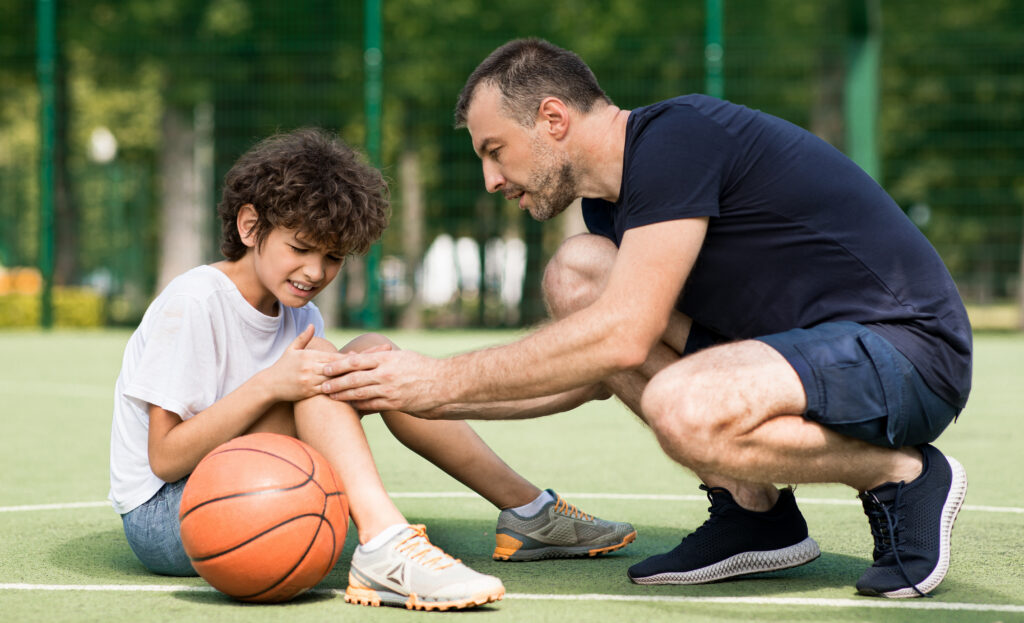
Parents should seek evaluation if their child experiences significant swelling, pain, instability, or difficulty returning to normal activities after a knee injury. Prompt diagnosis can help prevent additional damage and ensure the child receives appropriate care.
How ACL Injuries are Diagnosed
Diagnosing an ACL injury begins with a detailed medical history and physical examination. A pediatric orthopedic specialist will evaluate how the injury occurred, what symptoms developed immediately afterward, and whether the athlete experienced a popping sensation or instability.
During the examination, physicians assess swelling, range of motion, tenderness, and knee stability. X-rays may be used to rule out fractures or identify injuries involving the bone. While X-rays do not show the ACL itself, they provide important information about the overall condition of the knee.
MRI imaging is commonly used to confirm an ACL tear and evaluate other structures, including the meniscus, cartilage, and surrounding ligaments. Imaging also helps physicians assess the status of the growth plates, which is especially important in children and adolescents.
Because young athletes are still growing, diagnosis and treatment planning require specialized pediatric orthopedic expertise. Physicians must consider both the current injury and the athlete’s future growth and development when creating a treatment plan.
Treatment Options for Pediatric ACL Injuries
Treatment for ACL injuries in children depends on several factors, including the athlete’s age, activity level, severity of the tear, and whether the knee remains unstable.
In select cases, non-surgical treatment may be appropriate. This may include physical therapy, strengthening exercises, activity modification, and bracing. However, many young athletes with complete ACL tears require surgery because the ACL plays an essential role in maintaining knee stability.
Pediatric ACL reconstruction has become the standard surgical treatment for many children and teens with complete ACL tears. Unlike adult ACL surgery, procedures for growing athletes require careful planning to protect the growth plates while restoring stability and function.
Advances in ACL surgery for children allow pediatric orthopedic surgeons to customize treatment based on each child’s anatomy, skeletal maturity, and athletic goals. Modern techniques, including improved ACL graft fixation and specialized ligament reconstruction implants, allow surgeons to restore knee stability while considering the unique needs of developing athletes.
ACL Reconstruction for Growing Athletes
ACL reconstruction in children requires specialized techniques because the growth plates near the knee are still developing. In the past, concerns about growth plate injury led some physicians to delay surgery until a child was fully grown. Today, advances in surgical techniques allow many young athletes to undergo ACL reconstruction safely.
With modern growth plate ACL surgery approaches, surgeons can reconstruct the ACL while minimizing the risk to developing bones. The goal is to restore knee stability while protecting future growth.
During ACL reconstruction, a graft is used to replace the damaged ligament. The graft must be securely attached to the bone so healing can occur properly. Advances in ACL graft fixation and reconstruction technology allow surgeons to select the most appropriate approach based on the child’s age, anatomy, and stage of development.
The goal of surgery is not only to repair the current injury but also to help young athletes return to sports safely while protecting long-term knee health.
Recovery and Returning to Sports Safely
Recovery after an ACL injury requires patience, commitment, and a structured rehabilitation program. Whether treatment involves surgery or non-surgical care, physical therapy plays an important role in restoring strength, flexibility, balance, and confidence.
For children who undergo ACL reconstruction, recovery typically takes approximately six to nine months, although timelines vary depending on the athlete, sport, and progress during rehabilitation. ACL recovery in children requires a gradual approach focused on restoring knee function before returning to competition.
Rehabilitation typically includes:
- Restoring full range of motion
- Strengthening the muscles around the knee
- Improving balance and coordination
- Practicing proper movement patterns
- Progressing through sport-specific exercises
Returning to sports too quickly can increase the risk of reinjury. Before an athlete is cleared to return, physicians and therapists evaluate strength, stability, movement mechanics, and readiness for the demands of competition.
Can ACL Injuries Be Prevented?
While ACL injuries cannot always be prevented, structured injury prevention programs can reduce risk by improving strength, coordination, and movement patterns.
Effective prevention strategies include:
- Strengthening the hips, core, quadriceps, and hamstrings
- Practicing proper jumping and landing techniques
- Improving balance and agility
- Completing dynamic warm-ups before practices and games
- Maintaining flexibility and conditioning throughout the season
Neuromuscular training programs teach young athletes how to move safely during high-risk activities such as jumping, cutting, and pivoting. These programs are especially valuable for athletes participating in sports with frequent changes in direction.
Parents and coaches can help reduce injury risk by encouraging proper conditioning, rest, and recovery throughout the year.
Schedule an Evaluation with The Pediatric Orthopedic Center
If your child experiences knee pain, swelling, instability, or a popping sensation during sports, prompt evaluation by a pediatric orthopedic specialist is important. Early diagnosis can help protect the knee from additional injury and ensure your child receives the most appropriate treatment.
At The Pediatric Orthopedic Center, our specialists understand the unique challenges of treating growing athletes. From diagnosis and rehabilitation to advanced procedures such as pediatric ACL reconstruction and growth plate-conscious ACL surgery, our team provides personalized care designed specifically for children and teens.
If your young athlete has suffered a knee injury or you are concerned about an ACL tear, schedule an evaluation with The Pediatric Orthopedic Center. Our team is dedicated to helping children safely recover, return to sports, and protect their long-term knee health.