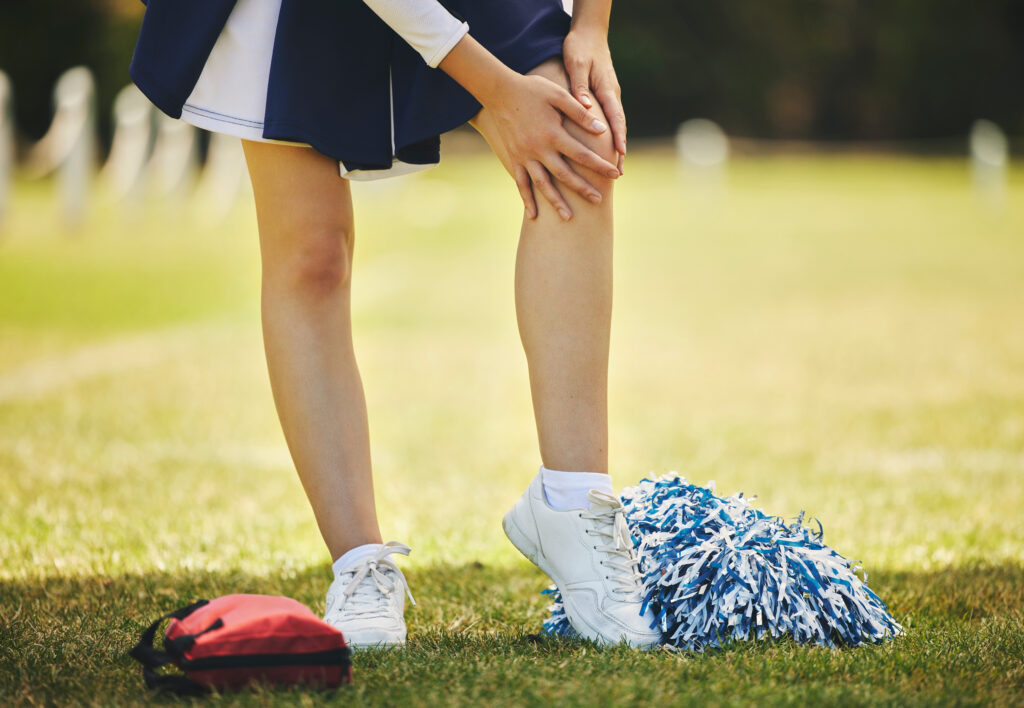
Cheerleading has evolved far beyond sideline chants and pom poms. Today’s athletes perform complex tumbling and stunting sequences that demand power, precision, balance, and endurance. With the rise of competitive teams, travel schedules, and national cheerleading events, training intensity has increased dramatically. Along with that, growth has led to an increase in overuse injuries in cheerleading.
Unlike sudden sports injuries, such as a fall or collision, overuse injuries develop gradually. They occur when repetitive stress is placed on bones, muscles, and soft tissues without enough time to rest and recover. Because many cheerleaders train year-round, they may be at higher risk for these types of injuries, especially during growth spurts.
Understanding why overuse injuries in cheerleading happen, how to recognize them, and how to prevent injury is essential for protecting young athletes and keeping them safely in the sport they love.
Why Cheerleading Puts Athletes at Risk for Overuse Injuries
Cheerleading combines elements of gymnastics, dance, and acrobatics. The sport demands repeated high-impact landings, rapid directional changes, lifts, throws, and catches. Tumbling and stunting in particular places significant stress on the wrists, shoulders, knees, ankles, and spine.
These repetitive movements can increase the risk when training volume rises without proper recovery. Flyers absorb force through the feet and ankles during landings. Bases use their shoulders and wrists repeatedly to lift teammates. Both positions require exceptional strength, flexibility, and control.
Cheerleading also has minimal true off-season time. Athletes often move directly from school teams to club teams to national cheerleading competitions. Without built-in rest periods, the body does not always have adequate time to repair microscopic stress to bone and soft tissue.
For adolescents whose bodies are still growing, these demands can create a higher risk of developing overuse injuries in cheerleading.
What Are Overuse Injuries?
Overuse injuries occur when repetitive stress exceeds the body’s ability to adapt. Instead of one dramatic event causing injury, small amounts of strain accumulate over time. Without adequate rest, tissues become inflamed or develop structural damage.
In sports medicine, overuse injuries are common in young athletes who train intensely or specialize early in a single sport. These injuries may affect:
- Tendons, leading to tendonitis
- Bones, resulting in stress fractures
- Growth plates, causing irritation or fracture
- Joints, leading to instability or inflammation
Unlike acute injuries, overuse injuries may start as mild soreness. Athletes often continue training through the discomfort, which can allow the condition to worsen.
Because cheerleading includes repetitive jumping, landing, and upper extremity loading, overuse injuries in cheerleading are particularly common in the lower extremities and wrists.
The Most Common Overuse Injuries in Cheerleaders
Several common cheerleading injuries are linked to repetitive strain.
Stress fractures
Stress fractures are tiny cracks in the bone that develop from repeated high-impact forces. They are frequently seen in the foot, ankle, and lower leg. Repeated tumbling passes and hard landings increase risk. Early symptoms include localized pain that worsens with activity and improves with rest.
Osgood Schlatter disease
Osgood schlatter disease is a growth-related overuse condition affecting the knee. It occurs when the patellar tendon repeatedly pulls on the growth plate at the top of the shinbone. This condition is common during growth spurts and can be aggravated by jumping and explosive movements.
Triangular fibrocartilage complex injuries
Cheerleaders who perform extensive tumbling may develop wrist pain related to triangular fibrocartilage complex injuries. The wrist absorbs substantial force during handstands, round-offs, and back handsprings.
Shoulder instability
Repeated overhead lifting and catching during stunting can lead to shoulder instability. Athletes may feel pain, weakness, or a sensation that the shoulder is slipping.
Lower back pain
Repetitive hyperextension during tumbling may stress the lumbar spine. In some cases, this can lead to stress reactions in the vertebrae.
These overuse injuries in cheerleading often develop gradually, making early recognition critical.
Growth Plate Injuries in Young Cheer Athletes
Children, preteens, and teenagers are not simply smaller adults. Their skeletons are still developing, and growth plates, also called physes, remain open through late childhood and into adolescence. These plates are made of cartilage that is softer and more vulnerable than mature bone.
Because of this, young athletes may experience growth plate irritation or fractures that would not occur in adults. In adolescent sports medicine, understanding how growth and athletic demand interact is essential.
During a growth spurt, bones lengthen quickly while muscles and tendons struggle to keep up. This imbalance can increase joint tension, especially during high-impact activities. As a result, young cheerleaders may develop growth-plate-related overuse injuries in the heel, knee, or wrist.
At the same time, children often heal faster than adults and frequently respond well to non surgical treatment when injuries are identified early. Proper diagnosis by a pediatric specialist ensures that treatment plans account for skeletal maturity and long-term growth.
How Training Intensity and Early Specialization Contribute to Injury
Training volume is one of the most significant risk factors for overuse injuries in cheerleading. Many athletes practice multiple times per week, attend private lessons, and compete at regional and national cheerleading events.
Early specialization, focusing exclusively on cheerleading from a young age, may increase injuries risk because the same movement patterns are repeated year-round. Without cross-training or seasonal breaks, the body has limited opportunity to recover.
Additional risk factors include:
- Rapid increases in training intensity
- Inadequate strength training
- Poor landing mechanics
- Joint hypermobility
- Insufficient nutrition
Strength flexibility balance is critical. Athletes who are extremely flexible but lack stability may be at higher risk for shoulder or ankle problems. Conditioning programs that emphasize controlled strength training can help support joints during demanding routines.
Mental fatigue also plays a role. As with other high-level sports, pressure to perform in competitions can lead athletes to ignore early pain signals.
Warning Signs of an Overuse Injury in Cheerleaders
Parents and coaches should watch for subtle changes. Overuse injuries in cheerleading often begin quietly.
Common warning signs include:
- Pain that worsens with activity
- Swelling without a specific traumatic event
- Limping or favoring one side
- Decreased performance
- Persistent soreness lasting more than several days
- Pain that returns as soon as practice resumes
Young athletes may minimize symptoms to avoid missing competitions. Encouraging open communication about discomfort is an important part of cheerleading safety.
If pain interferes with daily activities or continues despite rest, a medical evaluation is warranted.
Prevention Strategies: How to Protect Young Cheerleaders
Injury prevention strategies are essential in reducing overuse injuries in cheerleading.
Balanced strength training
A well-designed conditioning program strengthens the core, shoulders, hips, and ankles. Controlled strengthening improves stability during tumbling and stunting.
Proper warm-up routines
Dynamic stretching, muscle activation, and progressive drills prepare the body for high-impact movement.
Gradual progression
Avoid sudden increases in practice hours or difficulty level. Skill advancement should follow demonstrated strength and control.
Rest and recovery
Scheduled rest days allow bones and soft tissues to repair. Cross-training can reduce repetitive strain.
Attention to nutrition
Adequate caloric intake supports bone health and muscle recovery, particularly in growing athletes.
Education
Teaching proper technique and safe landing mechanics reduces repetitive stress on vulnerable joints.
When implemented consistently, these injury prevention strategies significantly reduce injury risk while supporting performance.
When to See a Pediatric Orthopedic Specialist
If a cheerleader develops persistent pain, early evaluation by a pediatric orthopedic specialist is important. In adolescent sports medicine, understanding growth plate status, skeletal maturity, and healing patterns makes a meaningful difference.
Unlike adults, children and teens may sustain growth plate injuries that require specific management. A pediatric specialist can determine whether symptoms represent a simple overuse condition, a stress fracture, or a more significant injury.
Evaluation may include a detailed physical exam, assessment of strength, flexibility, balance, and imaging when necessary. Most overuse injuries in cheerleading can be treated non-surgically with rest, bracing, physical therapy, and a structured return-to-play protocol.
Early treatment prevents minor irritation from progressing into a more serious sports injury.
Schedule a Consultation with The Pediatric Orthopedic Center
At The Pediatric Orthopedic Center, our team specializes in pediatric sports medicine and the unique needs of growing athletes. We understand that children, preteens, and teenagers heal differently from adults and require treatment plans tailored to their stage of development.
From stress fractures and Osgood-Schlatter disease to complex growth plate injuries, we provide comprehensive evaluation and evidence-based care for injuries in cheerleading. Our goal is always to relieve pain, restore strength and flexibility, and guide young athletes safely back to their routines.
If your child is experiencing persistent pain or signs of overuse injuries in cheerleading, we encourage you to schedule a consultation. Early diagnosis and thoughtful treatment protect both performance and long-term health, ensuring that young athletes can continue to thrive in the sport they love.