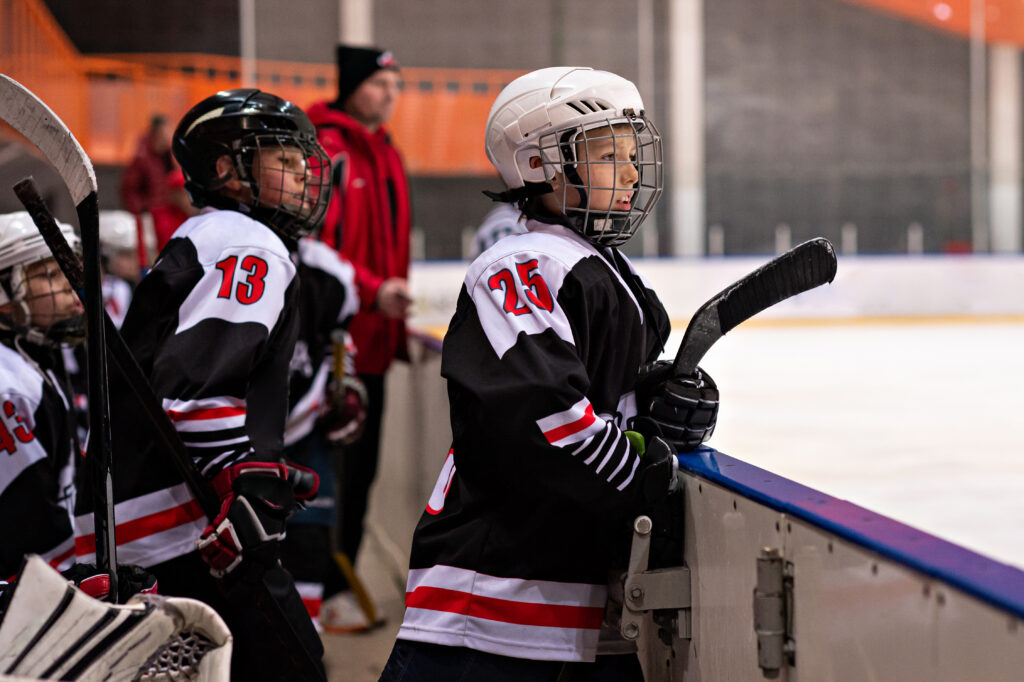
Hockey is fast, exciting, and demanding, making it one of the most popular youth sports in the country. From skating and shooting to checking and pivoting, the sport challenges every part of a young athlete’s body. With high-speed collisions, falls, and repetitive movements, hockey injuries in young athletes are unfortunately common. Understanding the risks, recognizing injuries early, and taking preventive steps can help kids stay safe while enjoying the game they love.
Why Hockey Has a High Injury Risk for Young Athletes
Hockey is a contact sport with a rapid pace, hard surfaces, and equipment that can both protect and create new hazards. Youth hockey participation is tremendous, with more kids joining each year, and female participation is growing steadily. Players face a combination of speed, stick handling, body checking, and collisions with boards or other players. Even falls on ice can cause significant injuries.
Young athletes are particularly vulnerable because their bones, growth plates, and ligaments are still developing. Pediatric hockey injuries often differ from those seen in adult players, and treatment strategies must account for growth and development. While the sport offers enormous physical and social benefits, parents should be aware of the unique risks associated with hockey.
The Most Common Hockey Injuries in Kids and Teens
While hockey injuries can affect almost any part of the body, certain injuries occur more frequently in pediatric players. Awareness of these patterns helps families respond quickly and seek the right care.
Shoulder and Clavicle Injuries
The shoulder is a common area of concern, especially the clavicle and acromioclavicular (AC) joint. These injuries often occur from falls onto the shoulder, hard checks, or heavy lifting during off-ice training. Typical symptoms include:
- Pain and swelling at the AC joint
- Tenderness and discomfort with shoulder movement
- Visible deformity in more severe cases
AC injuries are classified into types I through VI:
- Type I: Partial tear of AC ligaments, CC ligaments intact
- Type II: Complete tear of AC ligaments, partial or intact CC ligaments
- Type III: Complete tear of both AC and CC ligaments, often with visible deformity
- Types IV–VI: Rare, severe injuries that are typically treated surgically
Most pediatric AC injuries (types I–II, and many type III) are treated nonoperatively using immobilization in a sling, ice, NSAIDs, and physical therapy. Type III injuries require individualized treatment; surgery is only considered if there’s persistent pain, re-injury, or severe instability.
Sternoclavicular (SC) injuries are less common but require careful attention, especially posterior dislocations. Posterior SC dislocations are concerning due to proximity to major blood vessels and may require surgical intervention, often with a thoracic or vascular surgeon on standby. Anterior dislocations are usually treated nonoperatively with immobilization and anti-inflammatories.
Wrist and Forearm Fractures
Forearm and wrist fractures are the most frequent long-bone injuries in pediatric hockey players. Approximately 40% of all long-bone fractures in kids involve the radius or ulna, often near the wrist. These injuries typically occur when a child falls on an outstretched hand or collides with a player or the boards.
Children’s forearms have tremendous remodeling potential, especially under age 10. Most wrist and forearm fractures are treated nonoperatively with a splint or cast. Surgery is reserved for fractures that are grossly unstable or cannot be reduced. Recovery is generally excellent, and children often regain full function.
Knee Injuries: ACL and MCL
Knee injuries, while less common than forearm fractures, are serious when they occur. The most frequent pediatric knee injuries include:
- ACL tears: Often caused by non-contact twisting injuries when a skate catches the ice and the leg rotates awkwardly. Kids may hear a “pop,” experience difficulty bearing weight, and develop significant swelling (hemarthrosis). Pediatric ACL reconstruction is complex because growth plates must be protected. Techniques such as iliotibial band (ITB) autografts or transphyseal soft-tissue grafts allow reconstruction while minimizing growth plate damage. Rehabilitation is extensive, typically lasting 6–9 months.
- MCL injuries: Usually managed nonoperatively with bracing, rest, and physical therapy. Surgery is rare. Early treatment is preferred over prolonged bracing alone, which historically was used but often led to instability.
Sports Hernias
Sports hernias, or athletic pubalgia, are relatively uncommon in youth hockey. They result from small tendon tears near the pubic region caused by twisting, pivoting, and rapid directional changes, especially in goalies. Unlike traditional hernias, there is no visible bulge. Treatment is usually nonoperative, including rest, activity modification, and anti-inflammatories.
Toe and Forefoot Injuries
Toe and forefoot fractures, including fifth metatarsal fractures and Jones fractures, are often caused by trauma, collisions, or repetitive stress. Symptoms include pain with weight-bearing, swelling, and bruising. Most fractures are treated nonoperatively with walking boots, buddy taping, or splints, while more severe or displaced fractures may require surgical stabilization.
Concussions and Head Injuries: What Parents Should Know
Concussions are a significant concern in hockey, even at the youth level. They occur from direct blows to the head or rapid acceleration-deceleration forces. Symptoms can include:
- Headache
- Confusion or difficulty concentrating
- Balance problems
- Nausea
Parents should seek immediate evaluation for any suspected concussion. Pediatric athletes need individualized return-to-play plans, usually progressing gradually through symptom-limited activity before resuming full contact. Helmets reduce but do not eliminate the risk, and education on proper checking techniques is essential.
Growth Plate Injuries in Youth Hockey Players
Children and adolescents have growth plates at the ends of long bones. These areas are more vulnerable to injury because they are softer than mature bone. Common mechanisms in hockey include falls, collisions, or twisting injuries. Growth plate injuries are particularly important in the knee, ankle, and wrist.
Symptoms often include localized pain, swelling, and difficulty bearing weight. Imaging, typically X-rays, helps identify injuries. Many growth plate injuries heal well with immobilization or bracing, but more severe cases may require surgical stabilization. Early detection and treatment are key to preventing long-term complications.
Overuse Injuries from Repetitive Skating and Training
Overuse injuries in youth sports are increasing as training intensity and year-round participation rise. In hockey, repetitive skating, stick handling, and weight training can strain muscles, tendons, and bones. Common overuse injuries include:
- Patellar tendinitis
- Osgood-Schlatter disease
- Shoulder overuse injuries
- Wrist or forearm stress reactions
Prevention focuses on proper technique, balanced training, adequate rest, and gradual progression in intensity. Parents should encourage variety in sports and monitor for persistent pain or fatigue.
How to Prevent Hockey Injuries: Smart Safety Strategies
Prevention is always better than treatment. Key strategies include:
- Protective equipment: Helmets, mouthguards, shoulder pads, gloves, and properly fitted skates
- Skill training: Emphasize proper checking, falling, and skating mechanics
- Strength and conditioning: Focus on core strength, leg stability, and flexibility
- Rest and recovery: Avoid year-round single-sport specialization
- Education: Teach kids to report pain early rather than “playing through it”
These strategies reduce risk but cannot eliminate it entirely. Understanding common injury patterns helps families respond promptly when injuries occur.
When an Injury Needs Medical Attention
Prompt evaluation by a pediatric orthopedic specialist is warranted for:
- Severe pain or swelling
- Visible deformity
- Inability to bear weight or move a joint
- Suspected concussion
- Persistent instability or repeated injuries
Early assessment ensures proper diagnosis, protects growth plates, and minimizes the risk of long-term complications.
How a Pediatric Orthopedist Helps Hockey Players Return Safely
Pediatric orthopedists specialize in treating sports injuries in growing athletes. They provide:
- Accurate diagnosis using X-rays, CT, or MRI
- Nonoperative management (casts, splints, bracing, physical therapy)
- Surgical intervention when necessary with growth plate-sparing techniques
- Rehabilitation guidance for safe return to play
- Education on injury prevention
With expert guidance, most young athletes recover fully and safely return to hockey without long-term limitations.
Schedule a Consultation with Pediatric Orthopedic Center
The Pediatric Orthopedic Center is the premier hub for pediatric orthopedic care in New Jersey. Our fellowship-trained specialists have decades of experience treating hockey injuries in young athletes. From clavicle fractures and ACL tears to concussions and growth plate injuries, we create individualized plans to support healing, safety, and peak performance.
If your child has been injured or you want guidance on injury prevention, schedule a consultation with our team. Together, we can help your young athlete stay active, confident, and on the ice safely.