A scoliosis diagnosis often raises immediate questions for families, especially when a child loves sports. Parents worry whether sports and physical activity could worsen spinal curvature or increase the risk of injury. The good news is that most people with scoliosis can safely participate in sports, and many physical activities actually support spinal health, confidence, and overall health.
Understanding how scoliosis and sports interact allows families to make informed, balanced decisions that protect the spine while keeping kids active and engaged.
Can Children with Scoliosis Play Sports?
Yes, most children with scoliosis can and should play sports. A scoliosis diagnosis does not automatically limit athletic participation. In fact, remaining active is often encouraged because movement supports muscular balance, endurance, and emotional well-being.
At TPOC, we emphasize that scoliosis is not a reason to sideline children unnecessarily. With proper monitoring, many young athletes safely continue playing the sports they love throughout adolescence.
How Physical Activity Affects the Scoliotic Spine
Physical activity is not harmful to the scoliotic spine, in fact, movement is an important part of maintaining spinal health. Growth, muscle strength, posture, and overall conditioning all influence how scoliosis behaves over time, and regular activity helps support each of these factors in a positive way.
Sports and exercise promote core strength, coordination, cardiovascular fitness, and flexibility, all of which help the muscles surrounding the spine work more efficiently. Strong, balanced muscles can reduce fatigue, support good posture, and improve overall comfort, even during periods of rapid growth.
While no sport has been shown to cause scoliosis or worsen spinal curvature on its own, certain activities may place higher physical demands on the body. During growth spurts, repetitive or high-intensity movements can occasionally lead to muscle soreness, imbalance, or overuse, just as they can in children without scoliosis. For this reason, proper technique, conditioning, rest, and monitoring are important for all young athletes.
Rather than being dangerous, sports simply benefit from a thoughtful, individualized approach. With appropriate guidance and attention to the child’s growth and symptoms, physical activity remains a safe, healthy, and encouraged part of life for most children with scoliosis.
Sports and Activities That Can Help Scoliosis Symptoms
Many sports are beneficial for people with scoliosis because they promote balanced muscle engagement, endurance, and spinal awareness.
Low-impact activities such as swimming, cycling, walking, and elliptical training support cardiovascular fitness without excessive spinal compression. Swimming, in particular, encourages symmetrical movement and gentle strengthening of the back and core muscles.
Yoga, Pilates, and targeted scoliosis-specific exercise programs help improve posture, breathing mechanics, and flexibility. These approaches often emphasize controlled movement and core stability rather than brute force.
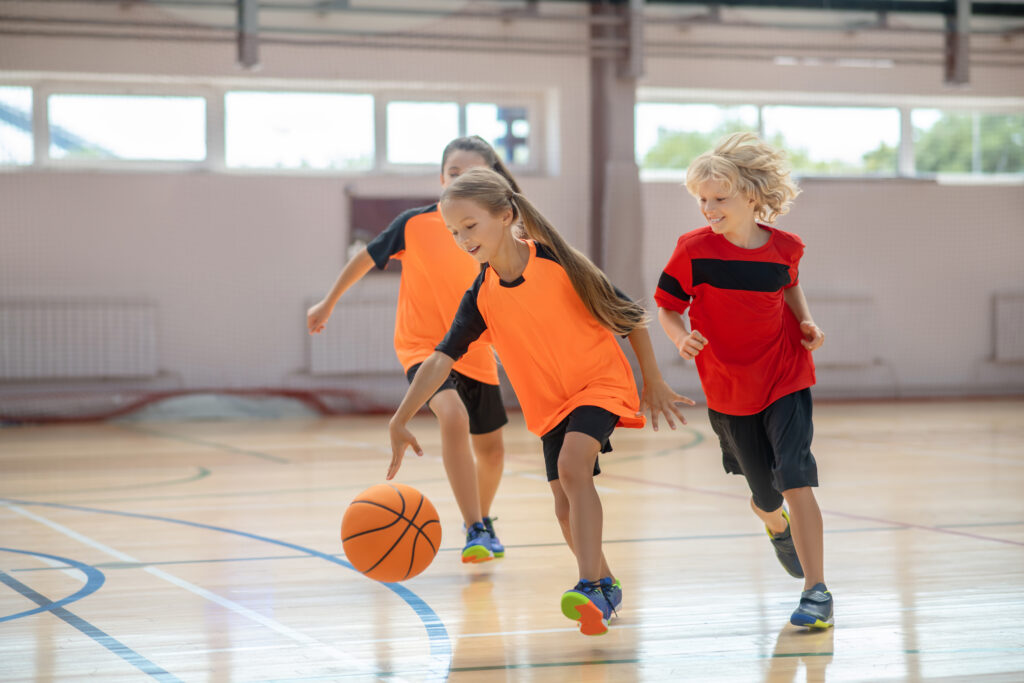
Team sports like soccer, basketball, and volleyball can also be appropriate, especially when athletes are monitored for overuse and trained in proper mechanics. When paired with conditioning programs that strengthen the core muscles, these activities support both athletic performance and spinal health.
The most helpful sports are those that enhance strength, coordination, and confidence while minimizing repetitive spinal strain.
Sports and Activities That May Require Individualized Guidance
Children with scoliosis can often remain active and participate in sports, but some activities may place added demands on the spine and are worth discussing with a physician, especially during growth spurts or when curves are more pronounced.
High-impact or contact sports such as football, rugby, gymnastics, and competitive cheer can involve repetitive loading, jumping, or collision forces. For some athletes, these stresses may be well tolerated, while for others they may contribute to discomfort or require closer monitoring and technique adjustments.
Activities that involve frequent spinal twisting, hyperextension, or loading, such as repeated back bends, heavy overhead lifting, or aggressive rotational movements, may need to be modified depending on the individual’s curve pattern, strength, and stage of growth. Similarly, events like long jump, high-intensity plyometrics, or advanced weightlifting can often be performed safely with proper coaching, conditioning, and medical guidance.
Other activities, including horseback riding or high-intensity fitness programs, may offer benefits like improved balance and strength, but can also introduce repetitive spinal compression. These activities are best evaluated on a case-by-case basis to ensure they are appropriate and well tolerated.
The goal is not to limit participation, but to understand how specific movements and training loads affect each child’s spine. Working with a pediatric orthopedic specialist allows families to make informed decisions, adjust activities when needed, and help children stay active while protecting their long-term spinal health.
Does Scoliosis Affect Sports Participation? What Factors Matter
Sports participation for children with scoliosis is highly individualized and guided by several important factors, including curve size, growth stage, symptoms, and current treatment plan.
Many children with mild scoliosis and no pain are able to participate fully in sports without limitation. For those who wear a brace, activity often continues with thoughtful adjustments to training schedules or brace wear to balance treatment goals with physical activity. Children who undergo surgery typically return to sports in a gradual, structured way, guided closely by their pediatric orthopedic surgeon.
Long-term outcomes for young athletes with scoliosis are generally very positive. Studies show that most adolescents return to sports after surgery and frequently reach the same, or even higher, levels of participation over time. Some may choose to adjust intensity or training volume, not due to inability, but as part of a sustainable approach to long-term health.
Rather than focusing on whether sports are “allowed,” the more helpful conversation centers on how to participate safely, confidently, and in a way that supports both athletic goals and spinal health.
Playing Sports While Wearing a Brace
Wearing a scoliosis brace does not mean giving up sports. In many cases, brace schedules can be coordinated around athletic participation.
Some children wear their brace during activities, while others remove it for practices or games, depending on the sport and the orthopedist’s recommendation.
Beyond the physical considerations, bracing can affect self-image, especially in adolescents. Encouragement, open communication, and normalization are essential. Maintaining sports involvement often helps teens feel confident and socially connected during treatment.
Signs It May Be Time to Reevaluate a Sport or Training Plan
Sports are generally excellent for children’s physical and emotional health, including those with scoliosis. That said, certain signs may indicate that an activity, training intensity, or technique should be reassessed with a medical professional.
Ongoing back pain, pain that increases over time, nighttime discomfort, weakness, changes in coordination, or noticeable shifts in posture are all reasons to check in with your child’s doctor. These signals don’t automatically mean that a sport is unsafe, but they may suggest that adjustments are needed.
You might also notice more subtle changes, such as declining performance, increased fatigue, or discomfort that doesn’t improve with rest. These can be signs of muscle imbalance, overuse, or excessive strain rather than a need to stop activity altogether.
Addressing concerns early allows for simple modifications, such as changes in training, conditioning, or recovery, to prevent minor issues from becoming long-term problems. The goal is to keep children active, confident, and supported as they grow.
How a Pediatric Orthopedist Can Help Guide Safe Sports Participation
A pediatric orthopedist plays a central role in helping children with scoliosis safely participate in sports. Through physical exams, imaging, and growth monitoring, specialists assess how the spine responds to activity over time.
At TPOC, care plans are individualized and often include collaboration with physical therapists and orthotists. We guide families on appropriate types of activity, conditioning programs that strengthen the core muscles, and timelines for returning to play after treatment or surgery.
Regular follow-ups ensure that as a child grows, their activity plan evolves with them, protecting both spinal health and athletic goals.
Schedule a Consultation with The Pediatric Orthopedic Center
Sports are an important part of childhood, and scoliosis should not automatically limit participation. With expert guidance, most children with scoliosis can remain active, competitive, and confident, both now and in the long term.
At The Pediatric Orthopedic Center, our fellowship-trained specialists have decades of experience helping children and adolescents balance scoliosis care with sports and physical activity. We offer advanced low-dose imaging, customized bracing, scoliosis-specific therapy, and modern surgical techniques designed to support rapid recovery and safe return to sports.
If your child has scoliosis and you have questions about sports participation, schedule a consultation with our team. Together, we’ll create a plan that supports spinal health, athletic goals, and overall well-being.