Watching your toddler take their first steps is one of the most exciting milestones in early childhood. However, many parents notice that their child’s feet may point inward or outward when walking. Known as toddler in-toeing out-toeing, these gait patterns are common and usually not harmful. In this blog, we’ll explore what in-toeing and out-toeing look like, their causes, how they typically resolve, and when it’s time to consult a specialist.
What Do In-Toeing and Out-Toeing Look Like?
In-toeing, sometimes called a pigeon-toed gait, occurs when a child’s feet point inward while walking. Children may trip over their own feet more often, and some may prefer to sit in a “W” position on the floor.
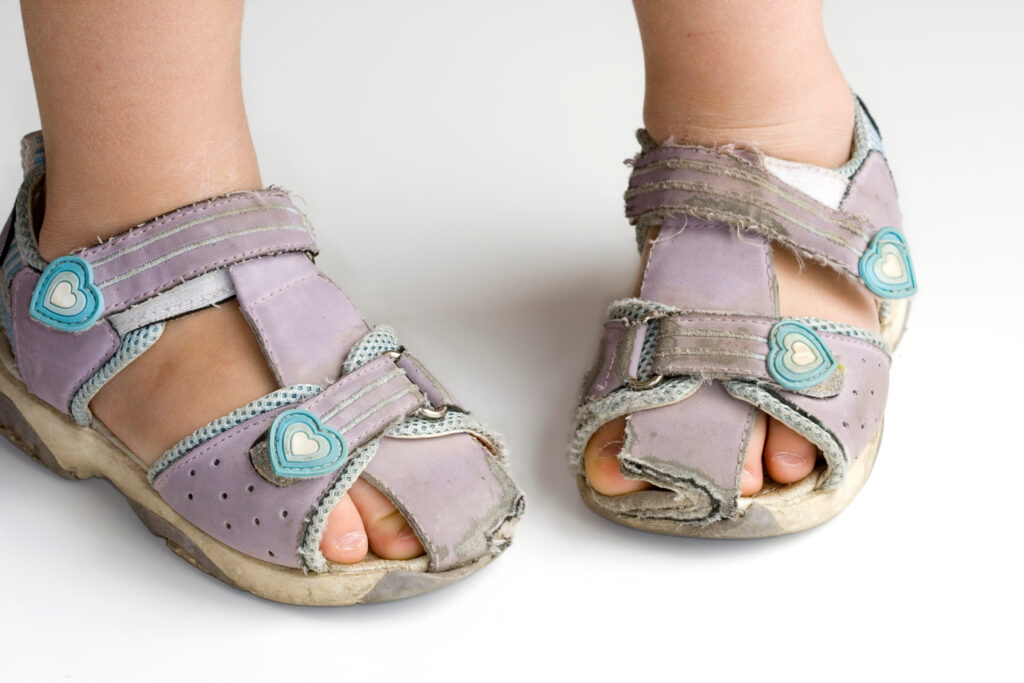
Out-toeing, or a duck-footed gait, is when a child’s feet point outward instead of straight ahead. While often first noticed when a toddler begins walking or when shoe wear is uneven, most out-toeing cases in toddlers are temporary and resolve naturally as the legs develop.
In both conditions, toddlers typically walk normally otherwise, and the gait itself is usually painless. While the appearance may be concerning, toddler in-toeing out-toeing is often part of normal gait development.
Common Causes by Age Group
Several factors can cause in-toeing or out-toeing in toddlers, including foot, shin, and thigh alignment issues:
In-Toeing Causes
- Metatarsus Adductus: A condition where the front of the foot curves inward. Often flexible and related to the baby’s position in the womb.
- Tibial Torsion: The shinbone twists inward, giving a pigeon-toed appearance. Often runs in families and improves with growth.
- Femoral Anteversion: The thigh bone rotates inward. Children may sit in a “W” position; this is usually harmless and improves naturally by age 8–10.
Out-Toeing Causes
- External Tibial Torsion: The tibia twists outward, leading to outward-facing feet, usually noticed between ages 4 and 7.
- Femoral Retroversion: The thigh bone rotates outward relative to the hip, producing a duck-footed gait. Mild cases often self-resolve; severe cases may require surgical correction.
- Womb Placement: Some infants develop rotational deformities due to positioning in utero. These typically resolve as bones grow and untwist naturally.
- Less Common Causes: Slipped Capital Femoral Epiphysis (SCFE), cerebral palsy, or other developmental conditions can cause persistent out-toeing. These require specialized evaluation.
When and How These Conditions Typically Resolve
The good news for most toddlers is that toddler in-toeing out-toeing often improves naturally with growth:
- Metatarsus adductus: Usually resolves within 6–9 months if flexible. Severe cases may need braces or surgery.
- Tibial torsion: Improves mostly between ages 2 and 6 but can continue until age 10. Tripping is most noticeable between ages 2 and 4.
- Femoral anteversion/retroversion: Improves gradually, often by age 8–10. Sitting in a “W” position is normal and not harmful.
Most children who in-toe or out-toe eventually develop a mature gait, learning to run, jump, and play normally without intervention. Surgery is rarely needed and only considered in severe, persistent cases.
Diagnosis: What to Expect at the Doctor Visit
If you take your child to a pediatric orthopedic specialist for toddler in-toeing out-toeing, here’s what you can expect:
- Medical History: Questions about family history, birth history, and walking milestones.
- Physical Examination: Observation of gait, foot progression angles, leg rotation, and stance.
- Measurements: Rotational profiles of hips, knees, and tibias may be assessed to determine the source of the in-toeing or out-toeing.
- Imaging: X-rays or other imaging may be ordered in unusual or severe cases.
- Discussion: The physician will explain whether the gait pattern is likely to resolve naturally or if intervention is needed.
When to Be Concerned: Warning Signs & Ages
While most in-toeing and out-toeing is benign, certain signs warrant evaluation by a specialist:
- Persistent tripping or falls beyond age 4–5.
- Pain in feet, knees, hips, or lower back.
- One leg significantly different from the other.
- Gait abnormalities that worsen over time.
- Delays in walking milestones or unusual motor development.
For children with underlying conditions such as cerebral palsy or SCFE, early diagnosis is critical for effective management.
Helping at Home: Video Tracking, Sitting Tips & Exercises
Parents can play a proactive role in monitoring and supporting gait development:
- Video Tracking: Record your child walking periodically to observe improvements or changes.
- Sitting Tips: Avoid prolonged “W” sitting if it causes discomfort, but occasional use is normal.
- Exercises: Encourage activities that strengthen core and leg muscles, such as climbing stairs, squatting, or balance games.
At-home strategies combined with periodic professional check-ins ensure your child’s gait develops safely.
Schedule a Consultation with The Pediatric Orthopedic Center
If you’re concerned about toddler in-toeing out-toeing, The Pediatric Orthopedic Center can provide a thorough evaluation. Our pediatric orthopedic specialists assess gait development, identify underlying causes like metatarsus adductus, tibial torsion, femoral anteversion, or femoral retroversion, and provide guidance for natural resolution or treatment when needed.
Most toddlers outgrow these gait patterns naturally, but early consultation provides reassurance, education, and support to optimize walking development.
Call today to schedule a consultation and ensure your child’s gait development stays on track.