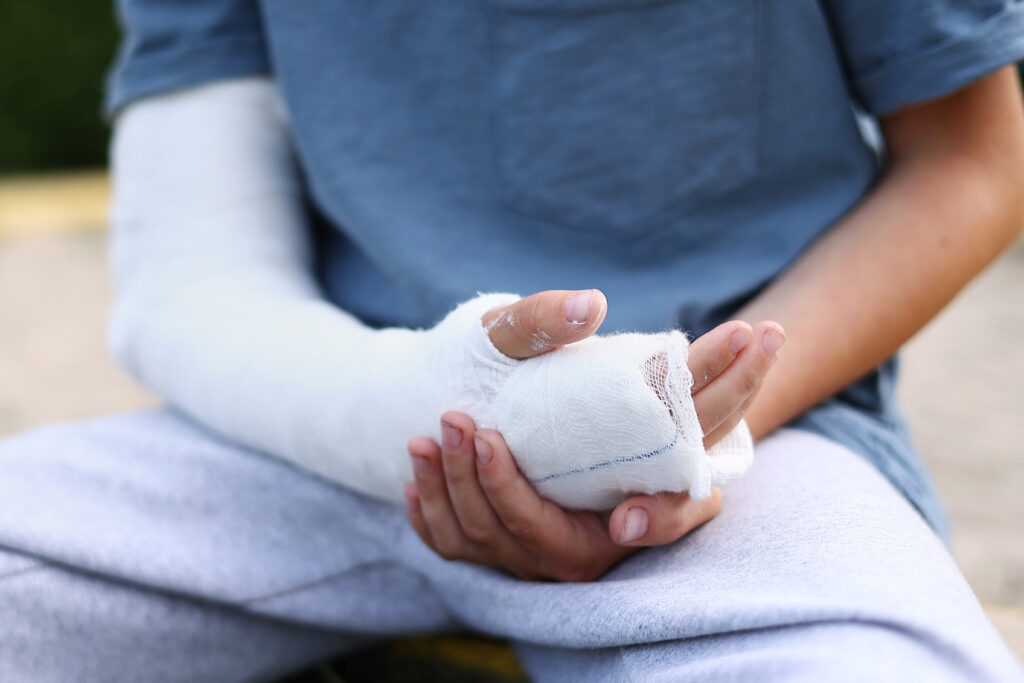
Active kids are constantly running, jumping, climbing, and exploring. With all that activity comes the occasional bump, fall, or tumble. Sometimes, these incidents result in pain, swelling, or limited movement, leaving parents wondering: is it a fracture vs strain, or something in between? Understanding the differences between fractures, sprains, and strains can help you respond appropriately and ensure your child receives the right care.
What’s the Difference Between a Fracture and a Strain?
Children’s bones and soft tissues behave differently than adults’, making it important to recognize the nuances of pediatric injuries:
- Fracture (Broken Bone): A crack or break in the bone. Children’s bones are more flexible than adults’, so fractures may bend or partially break rather than fully snap. Fractures can occur in any bone, from fingers to long bones in the arms or legs, and may require immobilization or surgery.
- Sprain: Stretching or tearing of ligaments, which connect bones at a joint. Sprains often occur from twisting injuries or sudden impacts. They affect joint stability but do not involve the bone itself.
- Strain: Stretching or tearing of muscles or tendons, which attach muscles to bone. Strains usually occur from overuse, lifting, or sudden force.
While symptoms can overlap, the type of injury directly influences the treatment plan, recovery time, and need for medical intervention.
Signs It Might Be a Fracture
Fractures in children, or pediatric fractures, often present with distinct red flags:
- Severe Pain: Pain intensifies when your child tries to move or bear weight on the injured limb.
- Visible Deformity: The area may look misaligned, bent, or out of place.
- Swelling and Bruising: Persistent swelling and discoloration that doesn’t improve with rest, ice, compression, and elevation (R.I.C.E.).
- Loss of Function: Inability to move, use, or put weight on the affected part of the body.
- Open Fractures: Any wound exposing bone requires immediate urgent care or emergency room attention.
Fractures may occur in any part of the body—arms, legs, wrists, fingers, or toes. Early recognition and immobilization with a cast, splint, or occasionally surgery are essential to prevent complications.
Signs It Might Be Just a Strain
Muscle strains often appear less dramatic than fractures but still require careful attention:
- Localized Pain: Pain is felt at the site of the injury and may radiate along the muscle.
- Muscle Weakness or Spasms: Children may complain of weakness or cramping.
- Tenderness and Swelling: Minor swelling and sensitivity at the injury site.
- Limited Movement: Difficulty moving the affected muscle but without deformity.
Strains generally result from overuse, sudden stretching, or awkward movements. While they are less serious than fractures, strains still need rest, targeted exercises, and sometimes physical therapy to prevent worsening.
When to Seek Immediate Medical Attention
Certain signs indicate that your child requires urgent evaluation:
- Cannot bear weight or move the affected limb.
- Severe swelling, bruising, or obvious deformity.
- Open wound or exposed bone.
- Numbness, tingling, or loss of sensation in the limb.
For less severe injuries, a pediatric orthopedic evaluation or urgent care visit ensures proper assessment and prevents long-term complications. Don’t wait to see if symptoms resolve on their own, as early diagnosis leads to better outcomes.
How Doctors Diagnose Fractures vs. Strains
Diagnosis begins with a comprehensive evaluation:
- Physical Examination: Doctors assess swelling, bruising, pain level, deformity, and range of motion. They may gently manipulate the area to determine tenderness or instability.
- Imaging Tests: X-rays are the most common tool to confirm fractures. Advanced imaging may be needed in complex cases or when growth plate involvement is suspected. Strains and sprains usually do not show up on X-rays, so clinical evaluation guides treatment.
- Assessment of Function: Observing your child’s ability to walk, grasp, or move the limb helps determine injury severity.
- Specialized Tests: In some cases, an MRI or ultrasound may be ordered to evaluate soft tissue injuries.
Early evaluation by pediatric orthopedic specialists ensures that bone injuries, sprains, or muscle strains are identified correctly, allowing timely and effective treatment.
Treatment Options: Rest, Bracing, or Casting
Treatment varies depending on the injury type and severity:
- Fractures: May require immobilization with a cast or splint to allow the bone to heal properly. Severe fractures may need surgical intervention to realign bones.
- Sprains: Treated with R.I.C.E., supportive bandages, and gradual return to activity. Severe sprains may benefit from physical therapy.
- Strains: Managed with rest, gentle stretching, strengthening exercises, and sometimes short-term bracing. Recovery usually takes a few weeks, depending on the muscle involved.
Regardless of the injury, proper care helps prevent long-term issues and supports a full return to play and normal activities.
How to Support Healing at Home
Parents can play a vital role in recovery:
- Rest: Ensure your child avoids activities that aggravate the injury.
- Ice: Apply ice packs 15–20 minutes at a time to reduce swelling.
- Compression: Wrap the affected area if recommended by your doctor to minimize swelling.
- Elevation: Keep the injured limb elevated above heart level to control swelling.
- Gentle Exercises: Once cleared, physical therapy or guided exercises can restore strength and mobility.
- Monitor Symptoms: Watch for worsening pain, swelling, or new symptoms and report them promptly to your healthcare provider.
Proper at-home care combined with professional guidance promotes faster recovery and reduces the risk of complications.
Schedule a Consultation with The Pediatric Orthopedic Center
When in doubt between fracture vs strain, early evaluation is crucial. The Pediatric Orthopedic Center specializes in pediatric fractures, bone injuries, sprains, and muscle strains. Our team provides:
- Thorough orthopedic evaluations for bone and soft tissue injuries.
- Accurate diagnosis using X-rays and imaging tests.
- Personalized treatment plans, including casting, bracing, or physical therapy.
- Guidance for safe return to activity and play.
Even if an injury seems minor, children’s bones and muscles can be unpredictable. Early assessment ensures the correct treatment, prevents long-term complications, and supports your child’s safe recovery.
Call today to schedule a consultation and get expert guidance for your child’s injury.