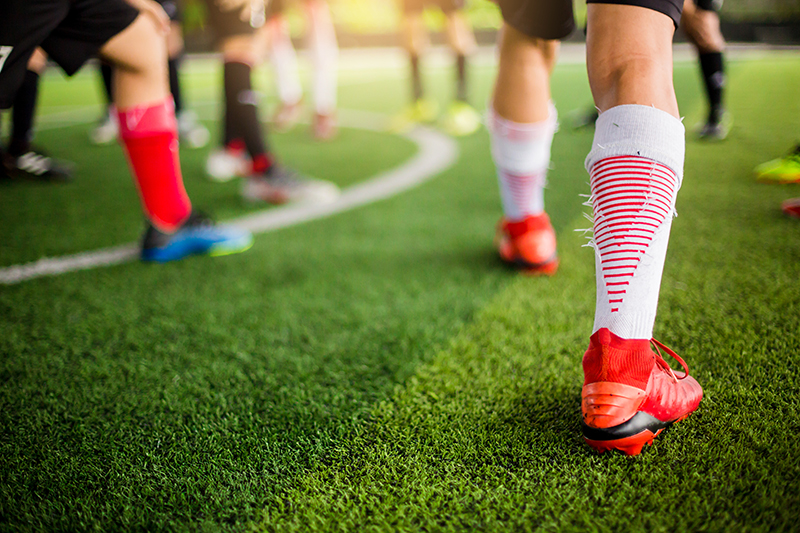
Fall brings young athletes back to football fields, soccer fields, cross-country courses, volleyball courts, field hockey fields, and cheerleading practices. While staying physically active has many benefits for children and teens, participation in sports also comes with the risk of injury. Among the most common sports-related injuries are pediatric fractures. A fall onto an outstretched hand can result in a broken wrist or forearm. Contact with another player can injure a finger or collarbone. Repetitive training can also place enough stress on a growing bone to cause a stress injury over time.
Children’s bones are still developing, which means fractures in young athletes aren’t always the same as fractures in adults. Open growth plates, differences in bone structure, and a child’s remaining growth can all affect how an injury presents and how it should be treated. Knowing which fractures commonly occur during fall sports—and when an injury should be evaluated—can help parents get their child the appropriate care.
What Are the Most Common Pediatric Sports Fractures?
Fractures can occur in many different body parts during sports, but some are especially common in active children and adolescents.
Wrist and Distal Radius Fractures
The distal radius is the end of the larger forearm bone near the wrist. This area is particularly vulnerable when a child falls onto an outstretched hand, something that can happen during soccer, football, field hockey, cheerleading, or almost any activity involving running, jumping, or contact. A wrist fracture may cause pain, swelling, bruising, tenderness, or difficulty comfortably moving or using the wrist.
Buckle Fractures
A buckle, or torus, fracture is a type of fracture seen in children because growing bones are more flexible than mature adult bones. Rather than breaking completely through, the bone compresses and buckles. Buckle fractures frequently occur around the wrist after a child lands on an outstretched hand. Although these fractures are generally stable, they still require an accurate diagnosis and appropriate treatment.
Forearm Fractures
The forearm contains two long bones, the radius and ulna. A fall can fracture one or both. Treatment depends on factors including the child’s age, the location and type of fracture, how well the bones are aligned, and how much growth the child has remaining. The same general injury may therefore be treated differently at different stages of childhood.
Finger and Thumb Fractures
Finger and thumb fractures can occur when a ball strikes the hand, a finger is bent awkwardly, or an athlete lands on the hand. These injuries are particularly relevant in sports such as football and volleyball. Pain, swelling, bruising, difficulty moving the finger, or an abnormal appearance shouldn’t simply be taped up and ignored so an athlete can continue playing.
Elbow Fractures
A fall onto an outstretched arm can also transmit force to the elbow. In younger children, fractures around the elbow require particular attention because this area contains developing bone and growth centers. Significant swelling, pain, or difficulty bending or straightening the elbow after a fall should be evaluated.
Clavicle Fractures
The clavicle, or collarbone, can fracture when an athlete falls directly onto the shoulder or experiences significant contact. These fractures may occur during football, soccer, field hockey, and other activities where collisions or falls are possible. Symptoms may include pain, tenderness, swelling, difficulty moving the shoulder, or a visible change in the shape of the collarbone.
Stress Fractures
Not every sports fracture happens during a single play. Stress fractures are overuse injuries that develop when repetitive microscopic bone injuries accumulate faster than the body can repair them. Pain typically begins during or shortly after physical activity and may become more persistent as the injury progresses. During fall sports, stress injuries may be particularly relevant for runners and other athletes participating in repetitive, high-volume training. Unlike an acute fracture, the athlete may not remember a specific moment when the injury occurred.
Which Fall Sports Have the Highest Risk of Fractures?
Fractures can happen in virtually any fall sport. The type of injury often reflects the movements and forces involved. Football involves contact, tackles, and falls, creating opportunities for fractures involving the fingers, hands, wrists, forearms, and collarbone. Soccer and field hockey involve running at speed, player contact, and falls. When an athlete instinctively reaches toward the ground to catch themselves, the wrist and forearm may absorb the force.
Volleyball places the fingers and thumbs at risk when they are struck or bent by the ball. Diving or falling can also result in wrist or forearm injuries. Cheerleading combines jumping, tumbling, stunting, and repetitive weight bearing through the arms. Falls can result in acute fractures, while repetitive loading through the wrists can also contribute to stress injuries in young athletes. Cross-country has less direct contact, but the repetitive impact of running can increase the risk of bone stress injuries, particularly when mileage or training intensity increases too quickly.
Two patterns that can contribute to overuse injuries are repeated participation in the same sport year-round and entering a new season after relative inactivity followed by a sudden increase in workload.
Signs and Symptoms of a Fracture in Children
A fracture isn’t always obvious. Some children may even try to continue playing after getting hurt. Parents should watch for symptoms such as:
- Significant or worsening pain
- Swelling or bruising
- Tenderness over a bone
- Difficulty moving the injured body part
- Difficulty walking or bearing weight
- Limping or favoring one side
- An abnormal position or visible deformity
- Pain that doesn’t begin improving as expected
Not every broken bone causes dramatic symptoms. If a child isn’t using an arm or leg normally after an injury, or pain and swelling persist, evaluation may be appropriate even without an obvious deformity. Severe injuries, including an open fracture or significant deformity, require prompt medical attention.
Sprain vs. Fracture: How Can You Tell the Difference?
It can be difficult for parents to distinguish a sprain from a fracture at home because the symptoms often overlap. Both can cause pain, swelling, bruising, tenderness, and difficulty using the injured area.
In growing children, there is another important consideration: the growth plate. Growth plates are developing areas near the ends of children’s long bones. Because these areas remain open during childhood and adolescence, an injury that affects a ligament in an adult can sometimes involve a growth plate in a younger athlete.
Parents therefore shouldn’t assume that an injury is “just a sprain” based on appearance alone.
If a child has significant pain or swelling, tenderness over a bone or growth plate, difficulty bearing weight or using the injured area, or symptoms that aren’t improving, a pediatric orthopedic evaluation can help determine what was injured.
When Does a Child Need an X-Ray for a Sports Injury?
Not every sports injury requires an X-ray. The decision depends on how the injury occurred, where the child is tender, the severity of symptoms, whether the child can use the injured body part normally, and the child’s age and stage of development. When a fracture is suspected, X-rays can help identify the location and characteristics of the injury and whether the bones remain appropriately aligned. Pediatric X-rays can also require specialized interpretation because growing bones don’t look the same as adult bones. Growth plates and developing areas of bone change in appearance as children mature.
Some injuries may not be obvious on an initial X-ray. This is particularly true with early stress injuries. When symptoms continue despite normal initial imaging, the child’s specialist may recommend reevaluation or additional imaging depending on the suspected injury. X-rays are typically used as the initial imaging tool, while MRI may provide additional information when needed.
How Are Pediatric Fractures Treated?
Treatment for pediatric fractures depends on the child’s age, the bone involved, the location and severity of the fracture, whether a growth plate is involved, and how well the bones are aligned. Many fractures in children can be treated without surgery. Depending on the injury, treatment may involve a splint, brace, cast, activity restriction, or another form of immobilization while the bone heals.
Certain fractures need to be realigned, while others may require surgery to restore appropriate alignment or protect the child’s future growth and function. This is one reason pediatric-specific care matters. A treatment plan needs to account not only for the broken bone but also for the child’s stage of development and remaining growth.
How Long Does It Take a Pediatric Fracture to Heal?
There is no single healing timeline for every fracture. The child’s age, type and location of the fracture, severity of the injury, treatment, and remaining growth can all influence recovery. Returning to sports also involves more than waiting a certain number of weeks. Before a young athlete goes back to practices and games, the fracture needs to be appropriately healed and the child may need to regain the strength, range of motion, stability, and function required for the sport.
The demands also differ considerably by activity. A football player returning to contact, a volleyball player using a previously injured hand, a runner returning to repetitive impact, and a cheerleader returning to tumbling don’t place the same stresses on the body. For that reason, return to play should be individualized rather than based solely on the calendar.
Contact The Pediatric Orthopedic Center for Pediatric Fracture Care
Fractures are common injuries in physically active children, but growing bones require different considerations than adult bones. Growth plates, skeletal development, and a child’s remaining growth can all affect diagnosis and treatment.
At The Pediatric Orthopedic Center, our pediatric orthopedic specialists diagnose and treat fractures and other sports- and trauma-related injuries in children and adolescents. Treatment is individualized based on the child’s injury, age, stage of development, activity level, and goals.
If your child has been injured during a game or practice and you’re concerned about a possible fracture, contact The Pediatric Orthopedic Center at (973) 538-7700 to schedule an evaluation.
This information is intended for educational purposes only and should not replace professional medical advice, diagnosis, or treatment. Severe injuries, including open fractures, significant deformity, or other potentially serious injuries, require prompt medical care.