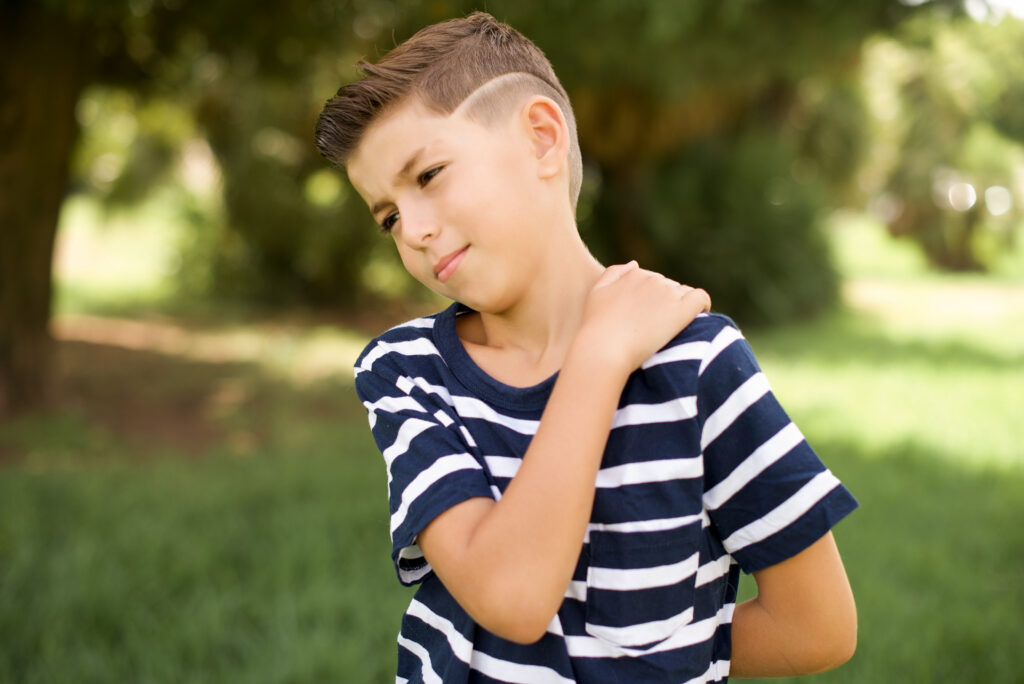
Shoulder pain is not just an adult problem. Children and teens can also experience discomfort in their shoulder joints, which may impact daily activities and athletic performance. While some aches are minor and resolve on their own, other cases may indicate more serious issues that require medical care. Knowing what to watch for is key to protecting your child’s long-term health.
Is Shoulder Pain Normal in Children?
Children are active, growing, and often participate in sports or other physical activities that challenge their muscles and joints. Because the shoulder is a complex joint with a wide range of motion, occasional soreness after activity is fairly common.
However, children’s shoulder pain that persists, worsens, or interferes with daily activities should not be ignored. Pain can arise from muscles, ligaments, soft tissues, or the upper arm bone (humerus) interacting with the shoulder blade (scapula) and collarbone (clavicle). While mild stiffness or tenderness may improve with rest, signs such as numbness, tingling, or a visible deformity are red flags that warrant further evaluation.
Common Causes of Shoulder Pain in Kids and Teens
Shoulder problems in children can stem from a variety of causes, including:
- Overuse injuries: Repetitive motions, especially in throwing or swimming, can irritate the rotator cuff tendons or surrounding soft tissues.
- Dislocations: Trauma such as a fall or collision can force the upper arm bone out of the socket.
- Fractures: The clavicle (collarbone) or humerus may be broken during falls or accidents.
- Scapular dysfunction: Abnormal movement of the shoulder blade can lead to weakness or pain.
- Growth plate injuries: Children’s bones have areas of developing cartilage called growth plates that are vulnerable to stress or trauma.
- Non-injury causes: Conditions such as frozen shoulder, inflammation of the rotator cuff, or referred pain from the neck or spine.
Pain may appear at the front, back, or side of the shoulder, sometimes radiating down the arm or causing a dull ache that affects daily activities.
Shoulder Pain Red Flags Parents Should Never Ignore
Parents should watch for symptoms that indicate a more serious shoulder injury or condition:
- Pain that worsens with activity even after rest
- Visible deformity or asymmetry between the shoulders
- Limited range of motion or inability to lift the arm
- Numbness, tingling, or weakness in the arm or hand
- Persistent swelling or bruising after a fall or collision
- Shoulder instability where the upper arm feels like it may slide out of the socket
If any of these signs are present, prompt medical care is crucial to prevent long-term damage.
Sports-Related Shoulder Injuries in Young Athletes
Children and teens who participate in sports involving overhand motions, such as baseball, softball, swimming, gymnastics, tennis, volleyball, and cricket, are at higher risk for shoulder injuries. Repeated throwing or overhead activity places significant stress on the shoulder joints, rotator cuff tendons, and growth plates.
Common sports-related shoulder injuries include:
- SLAP tears (Superior Labrum Anterior and Posterior): Damage to the labrum, the cartilage surrounding the shoulder socket, which may cause pain, weakness, and limited motion.
- Biceps tendonitis: Inflammation of the tendon connecting the biceps muscle to the shoulder, often from repetitive throwing.
- Internal impingement: Pinching of the labrum or rotator cuff tendons in overhead athletes.
- Instability or dislocations: The upper arm bone (humerus) can partially or completely move out of the socket.
- Scapular dysfunction: Abnormal movement of the shoulder blade that causes weakness, heaviness, or tenderness.
Early signs of sports-related injuries may include pain during or after activity, mild loss of motion, or discomfort at night. Regular physical exams, proper warm-ups, strength training, and attention to throwing mechanics can help prevent these injuries.
Growth Plate Injuries and the Developing Shoulder
The growth plates at the ends of the humerus, clavicle, and other shoulder bones are especially vulnerable in children and teens. Repetitive stress from sports, overuse, or falls can cause inflammation or injury to these areas. Left untreated, growth plate injuries may affect bone development or range of motion. Pediatric orthopedic specialists are trained to identify and treat these injuries, often using X-rays or MRI to evaluate the shoulder joints, soft tissues, and rotator cuff tendons.
Non-Injury Causes of Shoulder Pain
Not all shoulder pain is caused by trauma or overuse. Non-injury causes include:
- Frozen shoulder: Stiffness and loss of range of motion in the shoulder joint, often developing gradually.
- Soft tissue inflammation: Irritation of muscles, ligaments, or tendons that connect muscle to bone.
- Referred pain: Pain originating from the neck, spine, or chest.
- Postural or biomechanical issues: Poor posture or scapular dysfunction affecting shoulder alignment.
These conditions can often be managed with anti-inflammatory medications, physical therapy, and targeted exercises to restore function and prevent recurrence.
When to Seek Medical Care for Shoulder Pain
Parents should seek medical care for their children’s shoulder pain if:
- The pain persists for more than a few days despite rest and anti-inflammatory treatment
- There is a noticeable deformity or swelling
- Your child experiences numbness, tingling, or weakness
- Pain interferes with daily activities, school, or sports
Early evaluation can prevent worsening injuries and allow a faster, more complete recovery.
How Pediatric Orthopedic Specialists Diagnose and Treat Shoulder Pain
At pediatric orthopedic centers, specialists diagnose shoulder pain through:
- History and physical exam: Understanding the child’s activity level, symptoms, and any previous injuries
- Imaging: X-rays for bone injuries and MRI for soft tissues like the rotator cuff tendons or labrum
- Range of motion tests: Checking flexibility and strength in the shoulder joints
Treatment varies depending on the cause:
- Overuse injuries: Rest, ice, anti-inflammatory medications, and physical therapy to strengthen supporting muscles and improve range of motion.
- Dislocations or fractures: Reduction or immobilization with slings, sometimes surgery for more severe cases.
- Rotator cuff or labral tears: Physical therapy, and in some cases, arthroscopic surgery to repair damaged tissues.
Specialists also educate families on safe return-to-sport guidelines and ways to prevent recurrent shoulder injuries, including proper warm-ups, cool-downs, and limiting single-sport play year-round.
Schedule a Consultation with Pediatric Orthopedic Center
If your child is experiencing shoulder pain from sports, injury, or daily activities, don’t wait. Pediatric orthopedic specialists can evaluate shoulder problems, identify red flags, and create a personalized treatment plan. With expert care, your child can recover safely and return to activities they love.
Contact the Pediatric Orthopedic Center at our Cedar Knolls, Springfield, or Wayne offices to schedule a consultation and get your child back to safe, pain-free activity.