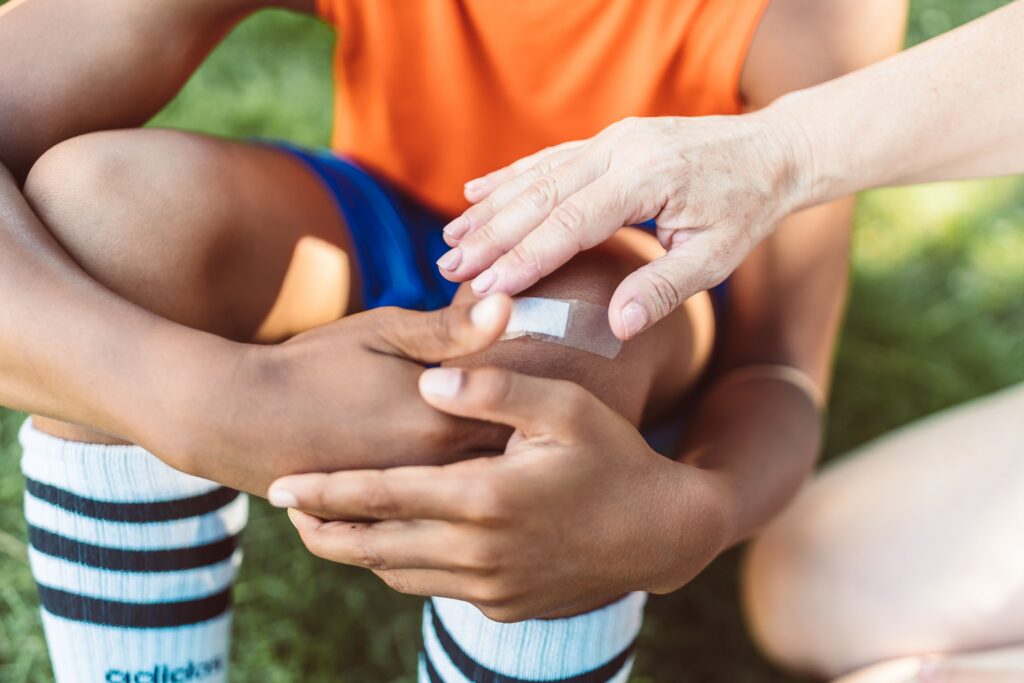
A child gets hurt during a game or practice, and suddenly a parent has to make a decision: Does this sports injury require the emergency room, can we go to orthopedic urgent care, or can it wait for an appointment?
Not every sports injury needs emergency care. Sprains, strains, possible broken bones, and other recent acute orthopedic injuries can often be evaluated by a pediatric orthopedic specialist. But some injuries have warning signs that require immediate treatment in an emergency department. Knowing the difference can help parents choose the appropriate level of care while making sure serious injuries aren’t overlooked.
When Should a Child Go to the ER for a Sports Injury?
A sports injury should be treated as an emergency when there are signs that the injury may be life-threatening, limb-threatening, or require treatment that cannot safely wait. For orthopedic injuries, go to the emergency room or call 911 for severe injuries such as:
- An open fracture, where the bone has broken through the skin
- Significant or obvious deformity
- An obvious dislocation
- Deep lacerations
- Excessive or uncontrolled bleeding
- Head trauma
- Changes in sensation or the ability to move the injured area
- Changes in skin color after an injury
An inability to bear weight or use an injured arm, worsening symptoms, or changes in sensation, movement, or skin color also warrant medical attention. Parents should pay attention to their child’s overall condition as well. If something seems significantly different about how your child is behaving or responding after an injury, seek medical evaluation.
Which Broken Bones Require Emergency Treatment?
A suspected broken bone doesn’t automatically mean a trip to the emergency room. The Pediatric Orthopedic Center’s Urgent Care/Walk-In Clinic evaluates recent acute injuries, including possible fractures, that aren’t life- or limb-threatening. However, some fractures require emergency treatment.
If bone is visible through the skin, the injury should be evaluated in the emergency room. The same applies when there is significant deformity or an obvious dislocation. Certain injuries may also appear less dramatic but still require evaluation. Growing children have open growth plates that can be injured during sports. An injury that appears to be an ankle sprain, for example, can sometimes involve a growth plate or another fracture instead. Persistent or unusual symptoms shouldn’t be ignored simply because an injury initially appears minor.
When Is Swelling, Deformity, or Severe Pain an Emergency?
Some swelling and pain can occur with both fractures and sprains, so these symptoms alone don’t always tell parents where to seek care. Visible deformity is different. If an arm or leg appears bent, misshapen, or significantly out of its normal position after an injury, the child should be taken to an emergency room rather than orthopedic urgent care.
Parents should also seek prompt medical attention if a child cannot bear weight, stops using an injured arm, develops changes in sensation or movement, or has a change in the skin color of the injured extremity. Symptoms that are getting progressively worse rather than better also deserve attention. When an injury doesn’t have emergency warning signs, symptoms that persist or worsen may indicate that medical evaluation is needed. This guidance isn’t intended for injuries that already have emergency warning signs. Those should be evaluated immediately.
ER vs. Urgent Care for a Child’s Sports Injury
A helpful way to think about the difference is the severity and type of injury. The emergency room is appropriate for severe or potentially life-threatening injuries, including open fractures, significant deformity, obvious dislocations, deep wounds or excessive bleeding, and head trauma.
The Pediatric Orthopedic Center’s Cedar Knolls Urgent Care/Walk-In Clinic is designed for recent, untreated acute orthopedic injuries that aren’t life-threatening. These include injuries caused by a recent fall, twist, or blow to the body, such as:
- Possible broken or fractured bones
- Sprains
- Muscle or tendon strains
- Other recent acute orthopedic injuries
The clinic provides evaluation by pediatric orthopedic specialists as well as on-site X-rays when needed, with treatment options including bracing, splinting, and casting. Overuse injuries are different. Pain that develops gradually from repetitive sports activity isn’t considered an acute walk-in injury and should generally be evaluated during a scheduled orthopedic appointment. If you’re unsure whether your child’s injury qualifies for the walk-in clinic, call The Pediatric Orthopedic Center for guidance.
What to Do Immediately After a Serious Sports Injury
If an injury appears serious, the first priority is to stop the activity. Don’t ask a young athlete to keep playing to see whether the pain improves. If the injured arm or leg needs support during transportation, keep it still in a comfortable position rather than repeatedly moving or testing it. For a wound that is bleeding, apply firm pressure with a clean dressing while seeking appropriate medical care. For a potentially life-threatening injury, call 911 rather than attempting to transport the child yourself.
When Can a Sports Injury Wait for an Orthopedic Appointment?
Not every injury needs same-day treatment. Overuse injuries are a good example. Pain that develops gradually through repetitive activity rather than from a specific fall, twist, collision, or other traumatic event generally doesn’t qualify for TPOC’s acute injury walk-in clinic. These injuries can be evaluated during a scheduled orthopedic appointment.
A minor injury may also be monitored when symptoms are improving and there are no emergency warning signs. However, schedule an evaluation when pain continues, repeatedly returns with sports, interferes with normal activity, or isn’t improving as expected. Parents don’t need to diagnose the injury themselves. If you’re uncertain about the appropriate level of care, calling a healthcare provider can help determine the next step.
Contact The Pediatric Orthopedic Center for Sports Injury Follow-Up Care
Knowing where to go after a sports injury can help a child receive the appropriate care without unnecessarily using the emergency room for an injury that can be treated by a pediatric orthopedic specialist. For severe orthopedic injuries—including open fractures, significant deformity, obvious dislocations, excessive bleeding, deep lacerations, or head trauma—go to your local emergency room or call 911.
For recent, untreated acute orthopedic injuries that aren’t life-threatening, The Pediatric Orthopedic Center offers an Urgent Care/Walk-In Clinic at its Cedar Knolls location. Current walk-in hours are Monday through Thursday from 5–8 PM and Saturday from 10 AM–2 PM.
For overuse injuries, persistent pain, or other conditions that don’t require immediate treatment, call The Pediatric Orthopedic Center at (973) 538-7700 to schedule an appointment.
This information is intended for educational purposes only and should not replace professional medical advice, diagnosis, or emergency treatment. If you believe your child is experiencing a life-threatening emergency, call 911.