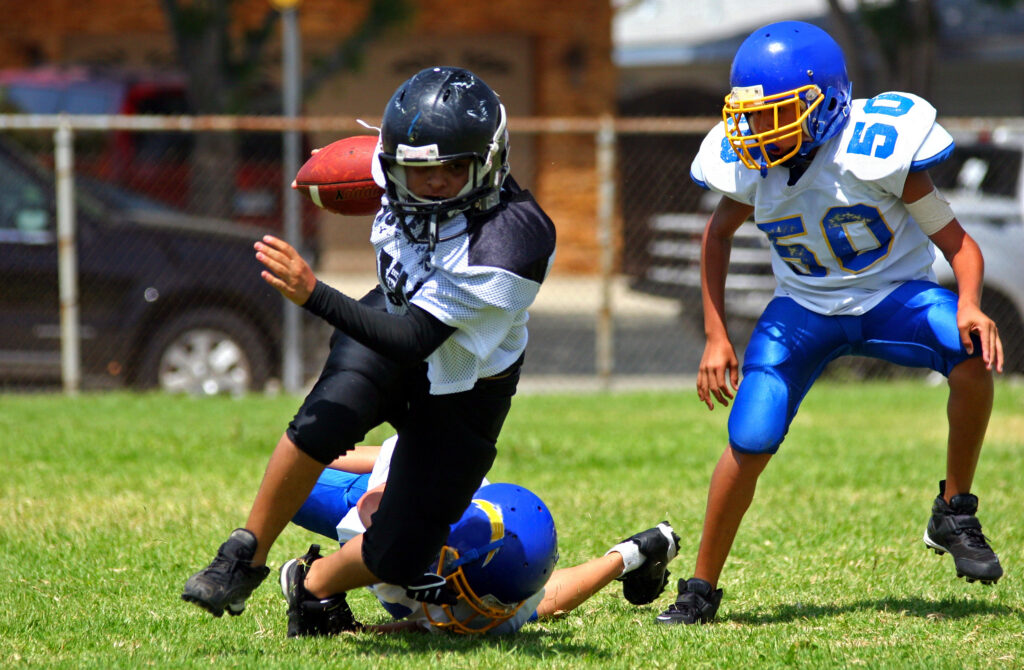
Football season arrives early in New Jersey. Pre-season training ramps up in August, and by the time school starts, young athletes are already in full contact. For families, that timeline makes late summer the right moment to think about youth football safety — before the first practice, not after the first injury.
Football is one of the most physically demanding contact sports young athletes play, and it produces a high volume of injuries relative to other youth sports. But most of what happens on the field is influenced by preparation: how well the athlete is conditioned, how well the equipment fits, how tackling is taught, and how quickly an injury is recognized and treated. Parents and coaches have more control over outcomes than they often realize.
This guide covers what to watch for, what to prevent, and when to bring in a specialist.
Why Youth Football Safety Matters for Young Athletes
Children are not small adults. Their bones are still growing and each long bone contains a growth plate — an area of developing bone that is softer and more vulnerable than the surrounding bone and ligaments. A force that produces a sprain in an adult can produce a fracture in a child, and an injury that involves the growth plate can affect future growth if it is not managed by someone trained to recognize it.
That biology changes everything about how football injuries in kids should be evaluated and treated. It also raises the stakes on prevention. A concussion managed poorly, an ACL tear treated with an adult-style approach, or a shoulder injury dismissed as soreness can have consequences that outlast the season.
Youth football safety is not about discouraging kids from playing football. It is about making sure that the athletes who love the sport can keep playing it — through high school and beyond — with healthy joints and healthy brains.
Common Injuries Among Youth Football Players
Injuries in football tend to cluster in the upper body, the knee, and the head, driven by collisions, falls onto an outstretched arm, and twisting forces.
Shoulder injuries. Shoulder dislocations are frequent, usually the result of hard collisions. Anterior dislocations — where the upper arm bone shifts toward the front — are the more common type and are typically managed with immobilization and anti-inflammatory medication. Posterior dislocations, where the bone shifts toward the back, are more serious because they can involve nearby nerves and blood vessels, and they may require ligament reconstruction. Shoulder separations from a hard fall or direct hit are also common and produce tenderness, swelling, and limited range of motion.
Clavicle fractures. A break in the collarbone from a direct impact or a fall onto the shoulder is one of the classic football injuries. So are injuries to the joints and ligaments on either side of the clavicle. Imaging is important here to determine the extent of the injury and whether treatment can be non-surgical.
Knee and ACL injuries. A non-contact twisting injury, pain bearing weight, and a popping sensation in the knee often point to an ACL tear. Recovery after ACL reconstruction typically takes six to nine months of structured rehabilitation before an athlete returns to the field. Because two major growth plates sit near the knee, ACL surgery in growing athletes requires pediatric-specific techniques that protect those areas while restoring stability.
Hand and finger injuries. Mallet finger — where the fingertip is forced down and cannot straighten — is usually treated with splinting for six to eight weeks. Jersey finger happens when a player grabs an opponent’s jersey and the finger is straightened while still trying to grip, rupturing the flexor tendon. That one often requires surgery and a recovery measured in months.
Elbow injuries. Falls, hard twists, and repetitive throwing can all injure the elbow. An acute injury may bring sharp pain or a pop; a gradual one may show up as stiffness, weakness, or pain only with certain motions.
Fractures and overuse injuries. Traumatic fractures of the wrist, foot, and ankle are common in football players, as are stress fractures from repetitive load — a risk that has grown with year-round training and early specialization.
Head injuries. Covered in detail below, because they deserve their own section.
Understanding Head Injuries and the Risk of Concussions
Concussion is the most common head injury in football. It is a mild traumatic brain injury that occurs when an impact causes the brain to shift or shake inside the skull. It does not require losing consciousness, and it does not always show up immediately — symptoms may develop over hours.
Signs of concussion include:
- Headache
- Dizziness or loss of balance
- Nausea
- Drowsiness or unusual fatigue
- Difficulty concentrating or memory problems
- Blurry vision
- Numbness or tingling
- Mood changes or irritability
Treatment starts with physical and mental rest. That means limiting exertion and also limiting screen time, video games, TV, reading, and schoolwork in the early stages, because cognitive load slows recovery just as physical activity does. Return to play should be gradual and medically supervised, and no athlete should go back while symptoms remain.
There is useful detail in how these injuries happen. Research has identified elbow-to-head contact as the most frequent mechanism in football head injuries, followed by head-to-head contact. That is actionable: coaching that focuses on tackle form and modifies how players use their elbows can directly reduce the risk of concussions. Whiplash from direct impact to the head and neck is another head injury that occurs in football.
For younger players, flag football offers a way to develop skills, conditioning, and football IQ with far less collision exposure. Many families use flag football through the elementary years and transition to tackle later, which is a reasonable approach to managing head injury risk during the years when kids are still building coordination and body control.
How Properly Fitting Helmets and Equipment Improve Safety
Equipment only protects a player when it fits. Hand-me-down gear and pads a child is expected to grow into are a genuine safety problem.
- Helmets. A helmet must fit snugly, sit level on the head, and not shift when the player moves. Inspect it regularly for cracks, worn padding, loose hardware, and a damaged shell. Properly fitting helmets are the single most important piece of equipment on the field, and they should be refitted as a child grows — a helmet that fit in July may not fit in October.
- Shoulder pads. Pads need to cover the shoulders fully while still allowing full range of motion, so impact forces distribute evenly rather than concentrating in one spot. Pads that are too large slide out of position on contact; pads that are too small leave the shoulder exposed.
- Cleats. Well-fitted cleats improve traction and stability, reducing slips and the twisting forces that injure ankles and knees. Replace outgrown footwear each season.
- Mouthguards. Inexpensive, easy, and effective at protecting teeth and reducing facial injury.
- Ongoing maintenance. Build an equipment check into the season, not just the first day. Gear takes a beating over ten weeks of practices.
Safe Tackling, Training, and Injury Prevention Techniques
Technique and conditioning are where injury prevention actually happens.
Teach and reinforce tackling form. Head-down tackling puts the head and neck directly in the path of force. Coaches who drill heads-up technique, proper shoulder placement, and controlled elbow use change injury outcomes for the whole roster.
Build a real pre-season base. Six to eight weeks of pre-season strength and functional training before contact begins gives the body time to adapt. Athletes who arrive at the first practice deconditioned are the ones who get hurt in weeks two and three.
Train legs and core. Functional and weight-training work targeting the legs and core, along with targeted stretching of leg ligaments and muscle strengthening, builds the stability that protects joints.
Warm up dynamically. Dynamic stretching before practices and games — active movements that take joints through their full range of motion — increases blood flow, raises tissue temperature, and prepares muscles for contact. Save static stretching for afterward.
Work on landing and jumping mechanics. Shock absorption on landing and jump training with dynamic warm-ups reduce the non-contact knee injuries that sideline athletes for most of a year.
Continue off-season strengthening. Maintaining conditioning between seasons keeps athletes ready and reduces the spike in injuries that follows a long layoff.
Choose quality over quantity. Over-exercising young athletes is counterproductive. Build in at least two rest days per week, and encourage multi-sport participation — avoiding early single-sport specialization prevents overuse of the same muscle groups and joints.
What Parents and Coaches Should Watch for During Practices and Games
Parents and coaches are the early warning system, and the signs worth acting on are not subtle once you know them.
Watch for:
- Any impact to the head, followed by confusion, headache, imbalance, or a player who seems “off”
- A player holding an arm against the body or unwilling to raise it
- Difficulty bearing weight, limping, or an inability to move a limb normally
- Visible deformity or immediate bruising at an injury site
- Swelling that develops within hours of an injury
- A reported pop or popping sensation in a joint
- Pain that lingers, recurs, or intensifies over days
- Numbness, tingling, or color changes in an arm or leg
Two cultural points matter as much as the checklist. First, athletes hide symptoms when they think reporting them means losing playing time — so the environment has to make reporting safe. Second, fatigue late in practices and late in the season degrades coordination and mechanics, which is when injuries cluster. Watching for tiredness is part of watching for injury.
How Football Leagues Can Help Reduce the Risk of Injury
Individual families can only do so much. League-level policy is what changes outcomes at scale, and football leagues that take youth football safety seriously tend to share a few practices:
- Limit full-contact practice time. Reducing contact repetitions in practice cuts total head impact exposure across a season without hurting skill development.
- Require certified coach training in tackling technique and concussion recognition, and refresh it annually.
- Enforce clear return-to-play protocols that require medical clearance after a suspected concussion, with no exceptions for playoff games.
- Run an equipment fitting program rather than leaving helmet fit to individual families, and retire gear on a schedule.
- Offer flag football divisions for younger age groups so families have a lower-contact entry point into the sport.
- Require preseason physicals and collect injury history, so coaches know which athletes are returning from injury.
- Build prevention warm-ups into every practice plan so they happen consistently instead of depending on which coach is running the session.
- Keep athletic trainers on site for games where feasible, and know the nearest facility that can evaluate a pediatric injury the same day.
Parents can ask about all of this at registration. Leagues respond to what families ask about.
When to See a Pediatric Sports Medicine Specialist
A young athlete should be evaluated at the first sign of an injury to the head, shoulder, or any joint. Concussions, tissue damage, and fractures are all dangerous if left untreated, and even sprains deserve a look — particularly in children, where a growth plate injury can mimic a simple sprain.
Seek evaluation for:
- Any suspected concussion
- Suspected fracture or obvious deformity
- Suspected ACL or other ligament tear
- Pain and swelling with difficulty bearing weight
- Limited range of motion in an arm or leg
- An inability to straighten or bend a finger after a jersey grab or jam
- Pain that lingers or worsens rather than improving with rest
For severe injuries — open fractures, obvious dislocations, heavy bleeding, head trauma with loss of consciousness or repeated vomiting — go to the nearest emergency room or call 911.
For recent, acute injuries that are not life-threatening, our urgent care walk-in clinic in Cedar Knolls provides same-visit evaluation by a pediatric orthopedic specialist with X-rays on site, so families skip the emergency room wait and the referral out to an orthopedist afterward.
Help Your Child Play Football Safely
Football teaches toughness, teamwork, and accountability, and most young athletes finish their seasons healthy. The families who do best treat safety as part of playing football rather than an obstacle to it — gear that fits, conditioning that starts before contact does, technique taught properly, rest built into the week, and injuries evaluated early instead of played through.
The Pediatric Orthopedic Center has led pediatric orthopedics in northern New Jersey for more than 30 years. Our board-certified and board-eligible pediatric orthopedic surgeons treat student athletes across every sport, from shoulder dislocations and clavicle fractures to growth plate injuries and ACL reconstruction designed specifically for growing bodies — along with prevention guidance and return-to-play planning.
If your child has been injured, or you want a nagging problem addressed before the season starts, call 973-538-7700 or request an appointment online. Let’s keep your athlete on the field.