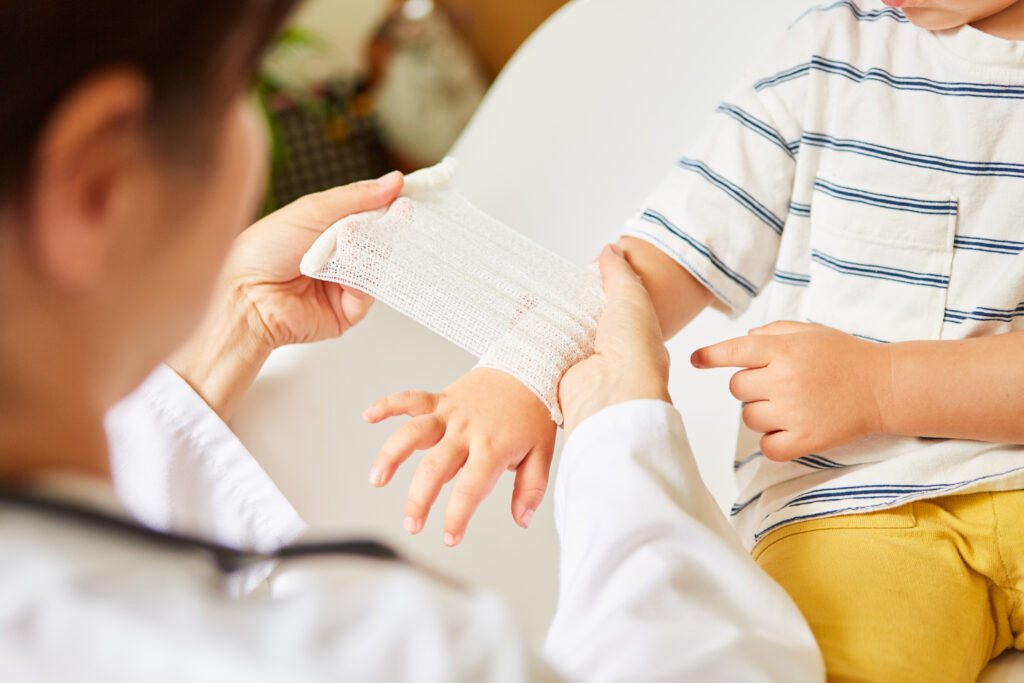
Active kids are prone to bumps, falls, and tumbles. But how do you tell if your child has a broken bone vs sprain in kids, or just a minor strain? Understanding the differences can help you respond quickly and ensure your child gets the right care.
Understanding the Difference Between a Broken Bone, a Sprain, and a Strain
- Broken Bone (Fracture): A bone crack or break that may be partial or complete. Children’s bones are more flexible than adults’, so fractures can bend or partially break rather than fully snap.
- Sprain: Stretching or tearing of ligaments, the soft tissue connecting bones at a joint. Often caused by twisting or sudden impact.
- Strain: Stretching or tearing of muscles or tendons, which attach muscles to bone. Usually results from overuse or sudden force.
While symptoms can overlap, the type of injury impacts how your child should be treated.
Signs Your Child May Have a Broken Bone
Watch for these red flags suggesting a fracture:
- Severe pain that worsens when trying to move or put weight on the injured area
- Visible deformity or misalignment
- Swelling and bruising that does not improve with rest, ice, compression, and elevation (R.I.C.E.)
- Inability to move or use the affected part of the body
- Open wounds or protruding bone, which require immediate emergency room care
Broken bones can affect any parts of the body and may need immobilization with a cast, splint, or in rare cases, surgery.
Symptoms of a Sprain in Children
Sprains often occur during play or sports, and may cause:
- Pain around a joint, especially when moving
- Swelling and mild bruising
- Limited movement without a visible bone deformity
Treatment for sprains typically includes R.I.C.E., supportive bandages, and gradual return to activity. Severe sprains may require evaluation by sports medicine specialists or physical therapy.
Signs of a Strain in Children
Strains affect the soft tissue in muscles or tendons. Symptoms can include:
- Pain at the site of injury, sometimes radiating along the muscle
- Muscle spasms or weakness
- Swelling and tenderness
- Difficulty moving the affected area
Strains are often less obvious than fractures but still require rest and targeted care to avoid worsening the injury.
When to Seek Immediate Medical Attention
Go to an emergency room or urgent care if your child:
- Cannot bear weight or move the injured area
- Shows severe swelling, bruising, or obvious deformity
- Has an open wound or exposed bone
For minor injuries, a pediatric orthopedic or sports medicine evaluation is recommended to prevent long-term issues.
How Pediatric Orthopedic Specialists Diagnose and Treat These Injuries
Diagnosis begins with a physical examination, assessing:
- Pain level and location
- Swelling and bruising
- Ability to move or put weight on the injured limb
Imaging tests like X-rays help confirm fractured bones. For sprains or strains, assessment focuses on soft tissue damage. Physical therapy may be recommended to restore strength and mobility once the injury heals.
Preventing Future Injuries in Active Kids
Parents can reduce the risk of injuries by:
- Encouraging proper warm-up and stretching before play or sports
- Using supportive footwear and protective gear
- Teaching safe movement techniques
- Gradually increasing activity intensity to avoid overuse injuries
Strengthening exercises for muscles, tendons, and ligaments can also help prevent sprains and strains.
Don’t Guess—Get Expert Help
Even if an injury seems minor, children’s bones and soft tissues can be unpredictable. Pediatric orthopedic specialists are trained to distinguish between a sprain or strain and a fractured bone, ensuring your child receives the right care. Early evaluation improves recovery, prevents complications, and helps kids return to play sports safely.
Takeaway: Understanding the signs of fractures, sprains, and strains, and knowing when to seek professional care, is key to keeping children healthy and active. From rest, ice, compression, and elevation to casting, bracing, and physical therapy, proper treatment ensures your child heals safely and fully.